Cottage food laws
Cottage food laws: the rules for selling food from home, by state
Cottage food laws let you sell certain foods made in your home kitchen without a restaurant license. Every state writes its own version, and the differences are big: some cap your sales, some want a county permit, some ban shipping. This guide covers the 15 states people search for most, each checked against the official source in November 2026.
Free onboarding. Pay as you use. No monthly fee for ordering.
The short version
- 15 state guides, each linked to the official source and checked November 2026
- Sales caps run from none to $250,000; registration from none to a county permit
- Online, delivery and shipping rules differ, so check yours before you take web orders
By state
15 states at a glance
The sales cap, the registration and the online rules in each state, checked against the official source in November 2026.
| State | Sales cap | Registration | Online or delivery |
|---|---|---|---|
| Texas | Sales cap$150,000 a year | RegistrationNo (only if you sell TCS foods) | Online or deliveryYes, if you or a household member deliver in person |
| Florida | Sales cap$250,000 a year | RegistrationNo | Online or deliveryYes: online, mail order, in-person delivery |
| California | Sales cap$88,878 (Class A) or $177,756 (Class B) in 2026 | RegistrationYes (county registration or permit) | Online or deliveryYes: online, mail and delivery services, in California |
| Ohio | Sales capNone found in ODA material | RegistrationNo ODA license | Online or deliveryUnclear: Ohio sales only, ask ODA first |
| Michigan | Sales cap$50,000 ($75,000 for items priced $250+) | RegistrationNo (MSU registration optional) | Online or deliveryYes: online and delivery apps, Michigan buyers only |
| South Carolina | Sales capNone in the statute | RegistrationNo (SCDA ID number optional) | Online or deliveryYes: online and mail order, in South Carolina |
| Arizona | Sales capNone in the statute | RegistrationYes (ADHS online registration) | Online or deliveryYes: online; dairy and meat delivered in person |
| Georgia | Sales capNo limit per GDA | RegistrationNo state license since July 2025 | Online or deliveryYes: online, within Georgia |
| New York | Sales capNone stated | RegistrationYes (state registration, no fee) | Online or deliveryYes: online and home delivery, New York only |
| Illinois | Sales capNone in the statute | RegistrationYes (local health department, up to $50) | Online or deliveryYes: online, delivery, in-state shipping |
| New Jersey | Sales cap$50,000 a year | RegistrationYes ($100 permit, 2 years) | Online or deliveryOrders online yes; hand over in person, no shipping |
| Indiana | Sales capNone stated | RegistrationNo state registration | Online or deliveryYes: online, delivery, in-state shipping |
| Tennessee | Sales capNone in the law | RegistrationNo | Online or deliveryYes: online; foods with dairy, meat or poultry delivered by you |
| Virginia | Sales capNone (pickles capped at $9,000) | RegistrationNo | Online or deliveryYes: online, phone and delivery, Virginia buyers |
| North Carolina | Sales capNone stated | RegistrationYes (apply to NCDA&CS) | Online or deliveryPickup and delivery covered; online not addressed |
A plain-English summary, not legal advice. Confirm with your state or county before you sell.
What cottage food laws are
A cottage food law is a state rule that lets you make low-risk food at home and sell it directly to customers. Without one, selling food from a home kitchen usually means a commercial kitchen, a permit and inspections.
States use different names. Texas says "cottage food production operation." California says "Cottage Food Operation," Class A or Class B. New York calls it a "home processor exemption." Indiana says "home-based vendor." Tennessee calls it the "Food Freedom Act." The idea is the same: small-batch, shelf-stable food, sold to the person who eats it.
The rules most states share
Read your own state's page before you act. These themes show up across the 15 states we checked:
- Low-risk foods only. Baked goods, candy, jams, dry mixes, granola and nuts are usually in. Texas, Arizona and Tennessee also let you sell some foods that need refrigeration, under extra rules.
- Meat, seafood and most dairy-based items are out in almost every state. So are canned low-acid foods such as salsa, which need a licensed kitchen.
- Direct sales to the person who will eat the food are the core of every law. Selling to shops or restaurants is banned or limited in most.
- Labels. Expect your name, ingredients, allergens and a home-kitchen statement. The wording is set by your state.
- Training. Several states want a food handler card or a food protection manager course.
- Local rules sit on top. Zoning, HOA, lease and home-business rules still apply in most cases.
- Taxes still apply. Cottage food laws change the food-safety rules, not your tax duties.
Where the 15 states differ most
Sales caps. Five of the 15 set a general dollar cap: Texas $150,000, Florida $250,000, California (Class A and Class B, adjusted each year), Michigan $50,000 and New Jersey $50,000. Virginia caps only pickles and acidified vegetables, at $9,000. The rest set none in the sources we read.
Registration. California, New Jersey, Arizona, New York, Illinois and North Carolina each want you to register, get a permit or apply before you sell. Texas requires registration only for foods that need time and temperature control. Florida, Michigan, South Carolina, Georgia, Indiana, Tennessee, Virginia and Ohio do not require a state permit for cottage food.
Online ordering. Thirteen of the 15 name online, internet or phone sales in the official rules. Ohio's and North Carolina's pages do not say. Texas allows online orders only when you, an employee or a household member delivers them.
Shipping. Florida, California, South Carolina, Michigan, Virginia and Illinois allow mail or in-state shipping with limits. New Jersey does not allow shipping through common carriers, and New York does not allow shipping out of state. Ohio does not allow sales outside the state.
How to start selling food from home
Whatever your state, the path looks the same. The steps below are the order most people work through. The state pages turn them into a checklist with your state's real numbers.
Pick your state
The table on this page links to each state page. Each page has quick facts, what you can and can't sell, registration and costs, and where you can sell online, by pickup or by delivery. It also covers label wording, a starting checklist and five or six common questions.
What if your state isn't here
Other states have their own cottage food laws too. Search your state department of agriculture or health for "cottage food" or "home processor," open the official page, and read the statute it links. If a secondary site disagrees with the official page, the official page wins.
Canada: home-based food businesses
Canada does not use the term cottage food law. Provinces and territories regulate home-based food businesses, and the details come from the province and sometimes the municipality or local public health unit.
Ontario is one example. The Ministry of Health's guide says home-based businesses may sell food under the Health Protection and Promotion Act and the Food Premises Regulation. You must contact your local public health unit to tell them you are a new food operator. Home-based businesses are subject to periodic inspection, and those that prepare only low-risk foods are exempt from certain requirements such as specified handwashing stations, commercial dishwashing and food handler certification. The guide is dated November 2021, so confirm with your health unit.
In Toronto, a home kitchen where food is prepared for commercial purposes is a food premises, and operators must notify the Medical Officer of Health before starting. Zoning is a separate check. Other provinces differ, so start with your provincial health ministry and your city.
How pickup.kitchen helps a home kitchen
pickup.kitchen is two things. It is a marketplace where people nearby find food businesses and order for pickup or delivery, with no app and no account wall at checkout. It is also the software your kitchen runs on. Cottage food law tells you what you may sell. pickup.kitchen handles the ordering, the pickup and the follow-up.
You get your own ordering site at yourname.pickup.kitchen with a menu, photos, checkout and payments to your own Stripe account, plus a free listing on pickup.kitchen. Set pickup windows and time slots that close when full. Mark a day sold out or closed. Run a weekly drop: open orders Monday, close Thursday night, bake Friday, hand over Saturday.
If you deliver yourself, the delivery tools build and optimize the route, send it to your phone, and take a photo at the door. Every guest lands on one customer list, and you can email them when the next batch opens. Meal plans handle weekly boxes with start and end dates. You can import a menu from a photo or PDF.
Pricing is "Free onboarding. Pay as you use." There is no monthly fee for ordering and no 15 to 30 percent cut. The current rate is 10% per order, and on card orders the customer pays it at checkout.
pickup.kitchen does not decide what is legal for you. Use your state page for that, then use the site to run the business. See the home kitchens page at /for/home-kitchens for how it works day to day.
What we checked, and when
Checked November 2026 against the official sources linked below. Laws change, so open the official page for your state before you print labels or take your first order. We left out any field we could not confirm on an official page.
This is a plain-language summary, not legal advice. Check with your state and county before you sell.
Step by step
How to get started
- 1Step 1: Open your state pageRead the quick facts and the official source it links. Check for changes since November 2026.
- 2Step 2: Check every food you sellCompare each product with your state's allowed and banned lists. Anything that needs refrigeration is usually out.
- 3Step 3: Register, permit and trainDo what your state asks: a county registration, a permit, a food handler or food protection manager course.
- 4Step 4: Write your labelsAdd your name, ingredients, allergens and your state's exact home-kitchen statement.
- 5Step 5: Check your townZoning, HOA, lease and home-business rules sit on top of state law.
- 6Step 6: Open your ordering siteSet pickup windows and delivery, publish your label details and take your first orders.
Real screens
Take orders from your home kitchen
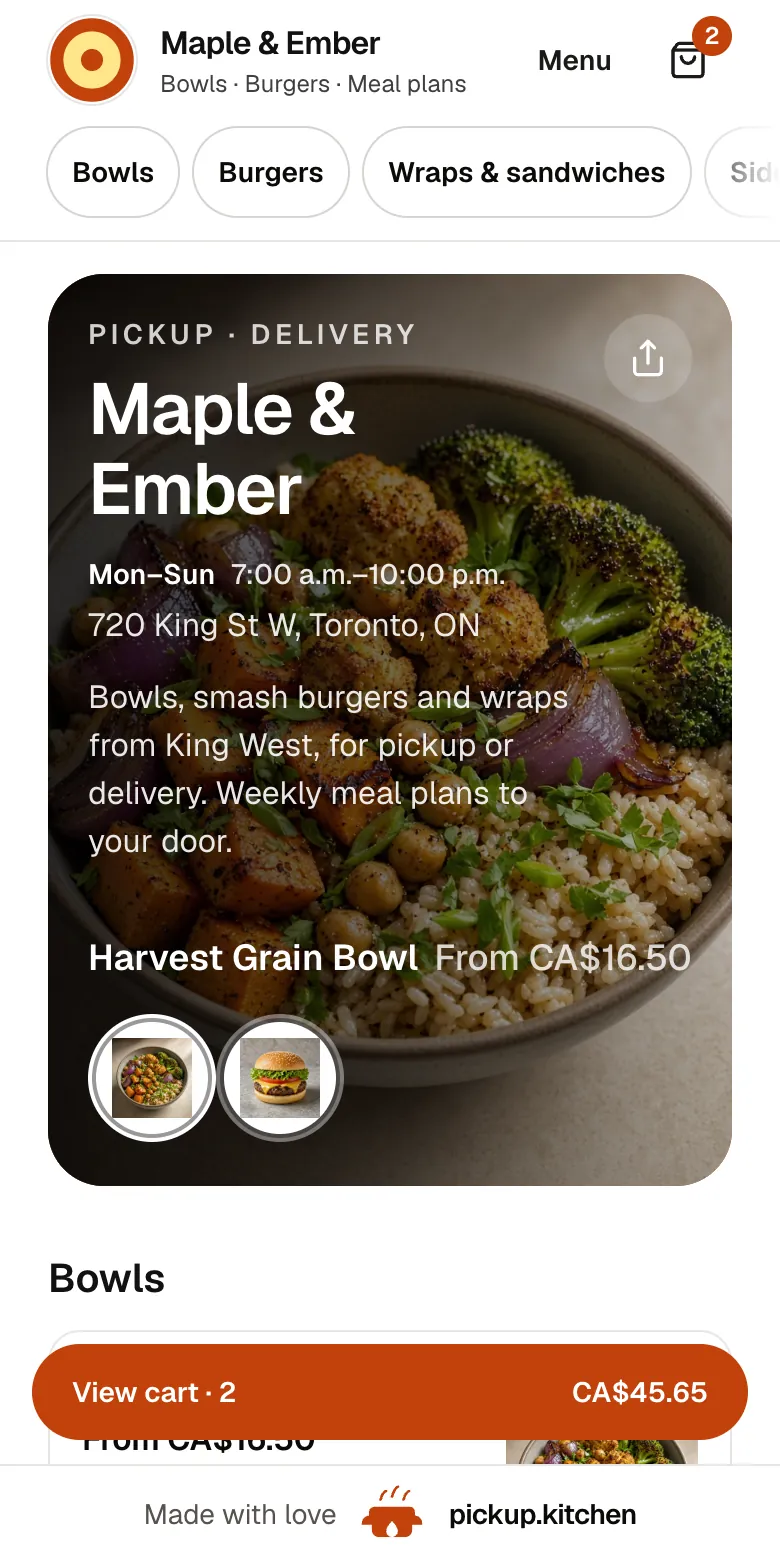
1Your guests
Your menu, on your own site
yourname.pickup.kitchen shows your dishes with photos and prices, and each guest picks pickup or delivery.
See how it works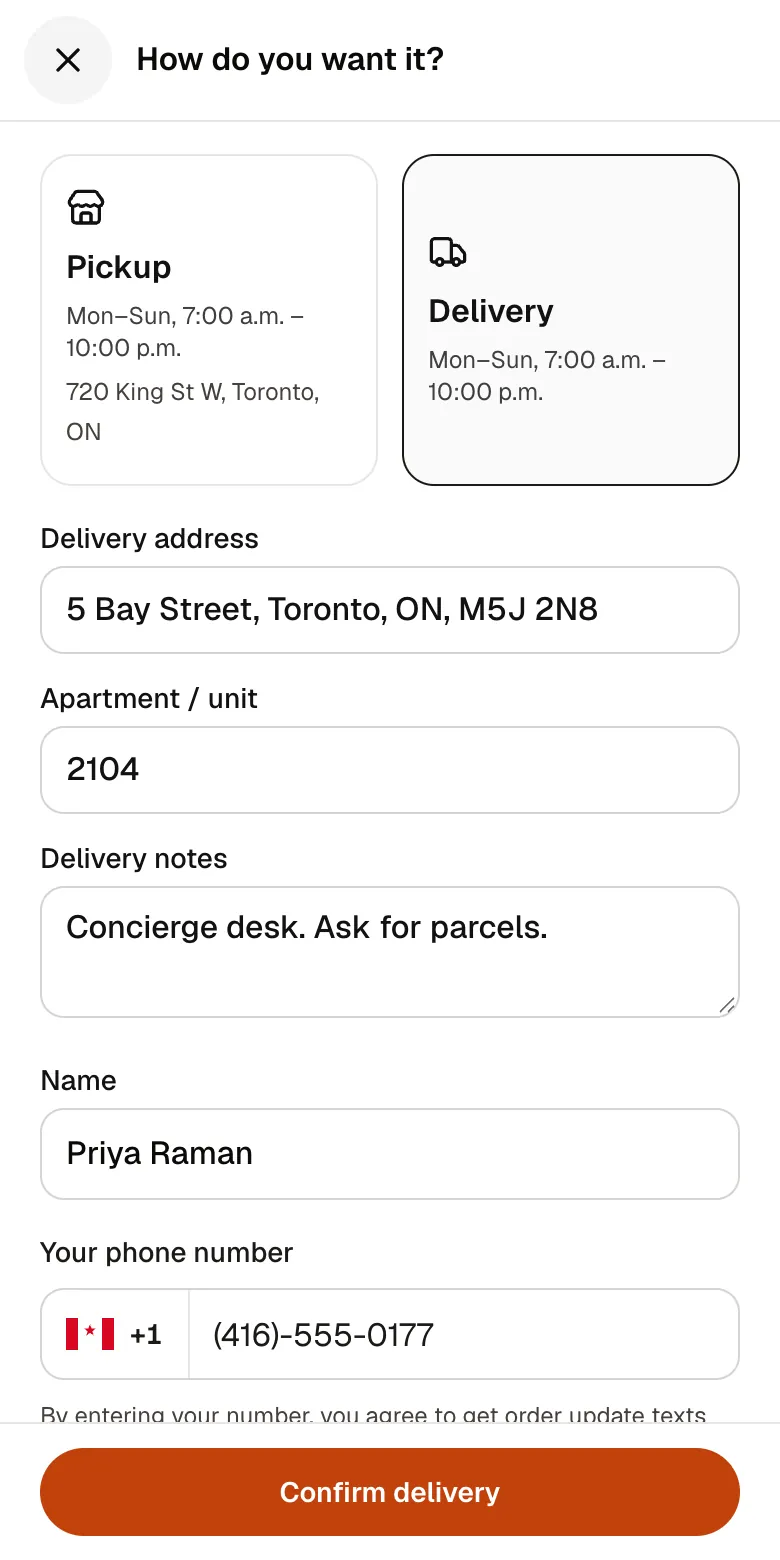
2Your guests
A checkout that takes seconds
A pickup time or a delivery address, then pay by card. No app to install and no account before paying.
See how it works
FAQ
Questions
What is a cottage food law?
A cottage food law is a state rule for selling low-risk foods, such as baked goods and jams, made in your home kitchen. You sell them directly to customers, without a commercial kitchen. Each state sets its own foods, limits, labels and permits.
Do I need a license to sell food from home?
It depends on the state. Florida, Michigan, Virginia and Tennessee need no state permit, while California, New Jersey, Arizona, New York, Illinois and North Carolina want a registration, permit or application first. Open your state page for the official source.
Can I sell cottage food online?
In most of the 15 states we checked, yes, with conditions. Texas allows online orders only when you or someone in your household delivers them. New Jersey allows online orders but not shipping. Ohio and North Carolina do not say. Read your state page.
Can I ship cottage food across state lines?
Usually not. Ohio forbids sales outside the state, New York does not allow out-of-state shipping, and Illinois, Indiana, Michigan, South Carolina and Virginia limit shipping to in-state buyers. California limits direct sales to those within the state.
How much can I earn from a cottage food business?
It depends on your state. Caps in the sources we read include $50,000 in Michigan and New Jersey, $150,000 in Texas and $250,000 in Florida. California adjusts its limits every year. Many states set no cap.
Is there a cottage food law in Canada?
Canada uses the term home-based food business. Rules are set by the province and sometimes the municipality. In Ontario you must tell your local public health unit, and you remain subject to inspection.
Keep reading
- By businessSell food from home: your own ordering pageSell food from home with a weekly menu, an order cutoff and pickup windows on your own link. Cottage food rules explained. Free onboarding, 10% per order.
- GuideHow to start a bakery business from homeHow to start a bakery business from home: check your cottage food rules, pick bakes that qualify, label and price them, take pre-orders. Steps and sources.
- ProductOnline ordering system for restaurantsAn online ordering system for restaurants: your own site at yourname.pickup.kitchen, time slots that close when full, and a kitchen screen. 10% per order.
- Productpickup.kitchen pricing: 10% per order, no monthly feepickup.kitchen pricing: free onboarding, no monthly fee, 10% per order. Delivery tools come with ordering. The driver app on its own is pay as you use.
- ProductRestaurant email marketingRestaurant email marketing from the list your orders build: send menus, specials, and closed dates to your guests. Includes five email examples to copy.
Sources
- Ontario Ministry of Health: A Guide to Starting a Home-based Food Business (November 2021, PDF)
- City of Toronto: Starting a Food Business (checked November 2026)
- Texas DSHS: Texas Cottage Food Production
- Florida FDACS: Cottage Foods
- California CDPH: Cottage Food Operations
- Ohio Department of Agriculture: Cottage Foods
- Michigan Compiled Laws 289.4102
- South Carolina Department of Agriculture: Home-based Food Production
- Arizona Department of Health Services: Cottage Food Program
- Georgia Department of Agriculture: Cottage Food
- New York Agriculture and Markets: Home Processor Exemption
- Illinois Department of Public Health: Cottage Food
- New Jersey Department of Health: Cottage Food Operator FAQ
- Indiana Department of Health: Home-Based Vendor Handbook
- Tennessee General Assembly: SB 484 / HB 130, Public Chapter 431
- Virginia Code 3.2-5130
- NCDA&CS: Home Processor
Free onboarding. Pay as you use.
Take orders from your home kitchen
Set pickup windows and delivery, publish your label details, and take your first orders on your own site.