Cottage food law · Georgia
Georgia cottage food law: selling from your home
The Georgia cottage food law no longer requires a state license. Since July 1, 2025, House Bill 398 lets you make non-potentially hazardous foods at home and sell them online, direct to customers and to retail stores. You must complete an ANSI-accredited food safety course, and the Georgia Department of Agriculture (GDA) does not inspect your kitchen.
Free onboarding. Pay as you use. No monthly fee for ordering.
The short version
- No state license since July 1, 2025 (HB 398)
- ANSI-accredited food safety training required; food handler training counts
- GDA says there is no limit on gross sales
Georgia at a glance
Checked November 2026- The law
- Cottage food (O.C.G.A. 26-2-470 et seq., as changed by HB 398)
- Sales cap
- No limit on gross sales or units, per the GDA cottage food FAQ
- Registration or permit
- No state license since July 1, 2025. Optional GDA Identification Number to use on labels instead of an address.
- Selling online
- Allowed; GDA's FAQ says sales to the end consumer within Georgia.
- Shipping
- Not addressed on the GDA cottage food page; GDA warns interstate sales may bring FDA oversight.
- Training
- ANSI-accredited food safety training program (food handler training acceptable).
- In effect
- HB 398 effective July 1, 2025.
Checked against the official source in November 2026. This is a plain-English summary, not legal advice. Rules change, so confirm with your state or county before you sell.
What you can sell
Georgia lets cottage food operators make only food that is not potentially hazardous. The GDA cottage food page lists:
- Loaf breads, rolls and biscuits
- Cakes, pastries and cookies
- Candies and confections
- Fruit pies, dried fruits, jams, jellies and preserves
- Dry herbs, seasonings and mixtures
- Cereals, trail mixes and granola
- Coated or uncoated nuts
- Vinegar and flavored vinegar
- Popcorn, popcorn balls and cotton candy
What you can't sell
Anything that is potentially hazardous, meaning it needs time or temperature control for safety, is out of the cottage food category. Pet food and pet treats are separate: they need a feed license from GDA's Agricultural Inputs division.
If you sell across state lines, GDA warns that may bring FDA oversight, and the manufactured food license GDA issues cannot be issued for food made in a home kitchen. Keep sales to customers in Georgia.
Registration, training and costs
HB 398 removed the state licensing requirement, effective July 1, 2025. You no longer apply for a GDA license or pay a license fee. If you do not want your home address on your label, GDA offers an optional Identification Number through its registration form.
You must complete an ANSI-accredited food safety training program. GDA says food handler training is acceptable. Look for a provider in ANSI's directory.
GDA's cottage food FAQ says cottage food businesses are not inspected and that the department "does not have any limits on gross sales or the number of units that can be produced." It also says a DBA may be required by your county or city, so contact your local government. Some farmers' markets and direct-marketing venues may ask vendors for a Food Sales Establishment License.
Where and how you can sell
GDA's cottage food page describes sales to consumers at events, online sales, and, since HB 398, sales to retail stores. GDA's FAQ says you may sell to the end consumer within Georgia.
An older line in the GDA FAQ says cottage food cannot go to retail establishments and that wholesale is not allowed. The newer cottage food page says HB 398 allows retail stores, so follow the newer page. A store that stocks your food must post signage saying the products are not subject to commercial food regulation or inspection.
The GDA pages we read do not address shipping or delivery apps. Email GDA at CottageFoodInfo@agr.georgia.gov before you ship or hire a courier.
Labels
Labels need your operation's name and a home-kitchen address (not a P.O. box) or a GDA ID number, the product name, ingredients by weight, net weight or volume, allergen information, and GDA's required statement. GDA's FAQ quotes the statement as "MADE IN A COTTAGE FOOD OPERATION THAT IS NOT SUBJECT TO STATE FOOD SAFETY INSPECTIONS."
That FAQ predates parts of HB 398, so copy the current statement from GDA's labeling guidance, or ask GDA, before you print a big run.
Getting started checklist
- Check that every product is not potentially hazardous.
- Complete an ANSI-accredited food safety or food handler course.
- Decide whether to request a GDA Identification Number for your label.
- Confirm the label wording with GDA and print your labels.
- Ask your city or county about a DBA, zoning or home-business rules.
- Check each farmers' market's vendor rules.
- If you will sell to stores, give them the signage requirement.
How pickup.kitchen fits the Georgia rules
GDA's pages describe online sales as part of the program, which makes an ordering site a good fit. pickup.kitchen gives you yourname.pickup.kitchen with a menu, photos and checkout, and payments go to your own Stripe account.
Use pickup windows for door pickup. Slots close when full, and you can mark a day sold out, so a Saturday drop stays at the size your oven can handle. If you deliver yourself, the delivery tools plan the route and send it to your phone, with a photo at the door.
Every buyer joins your customer list, ready for your next email. Keep sales inside Georgia and check delivery questions with GDA first. Free onboarding, pay as you use.
What we checked, and when
Checked November 2026 against the official Georgia sources linked below. Laws change, so open the official page before you print labels or take your first order.
This is a plain-language summary, not legal advice. Check with your state and county before you sell.
Real screens
Take orders from your home kitchen
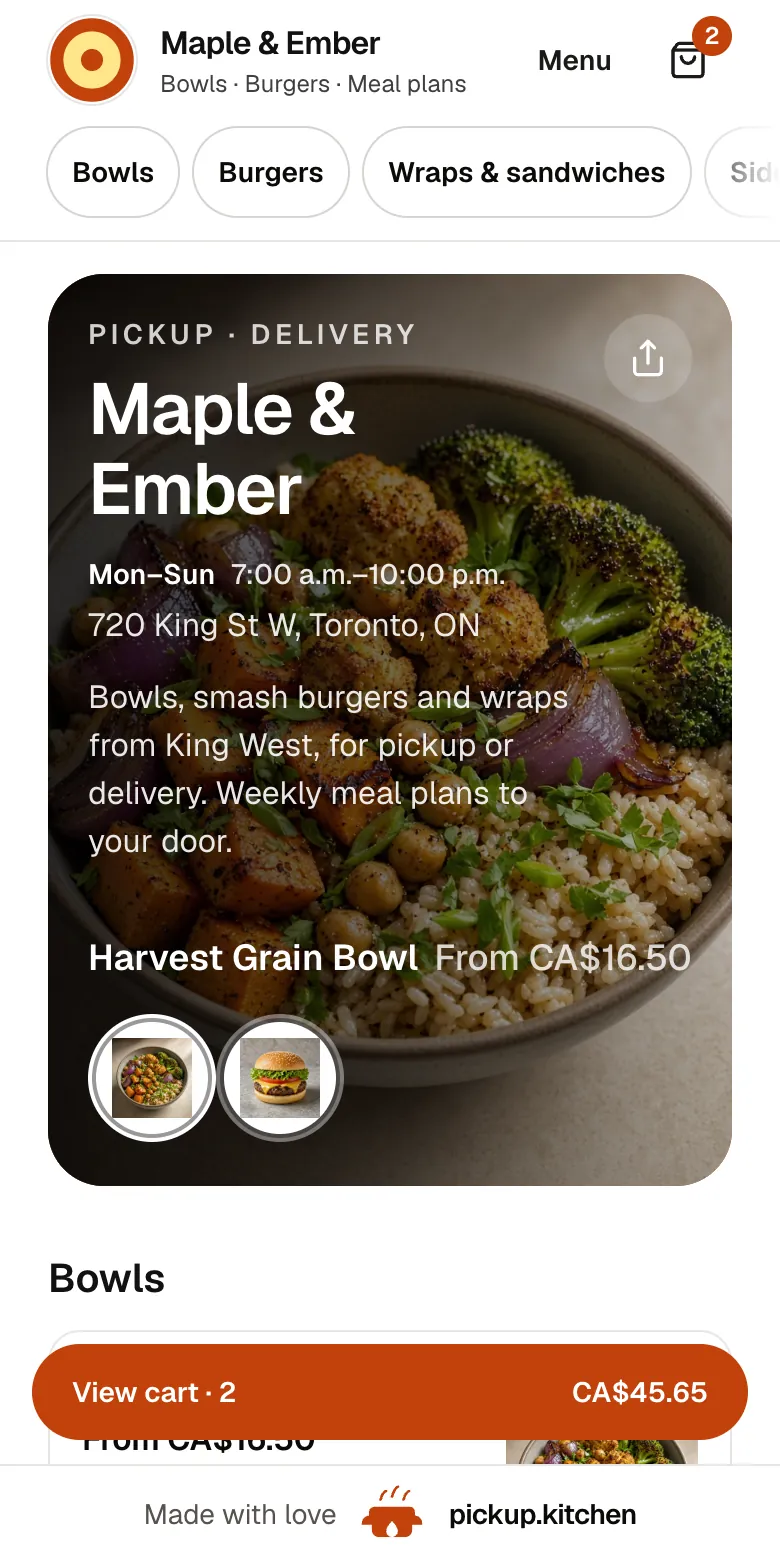
1Your guests
Your menu, on your own site
yourname.pickup.kitchen shows your dishes with photos and prices, and each guest picks pickup or delivery.
See how it works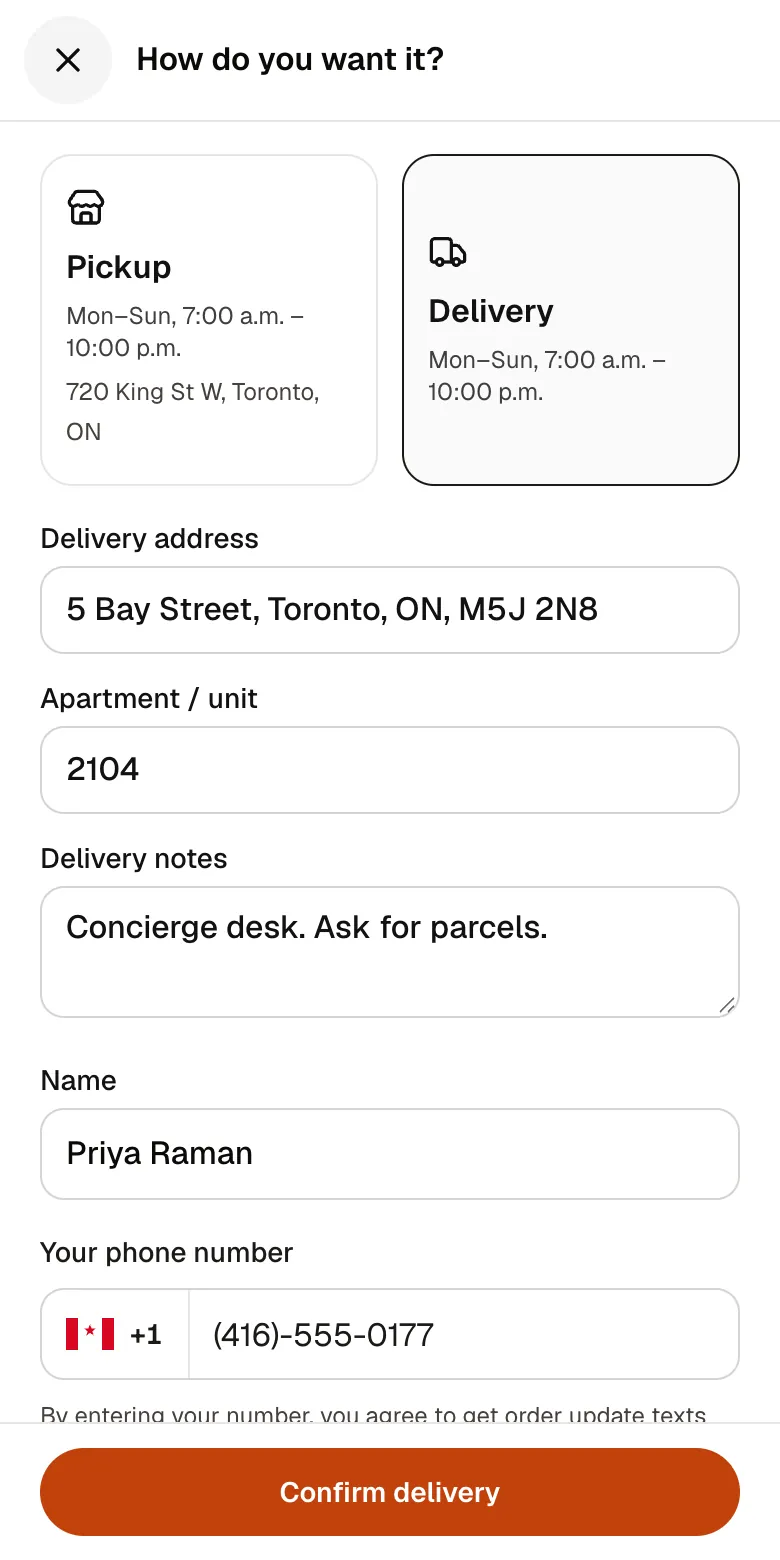
2Your guests
A checkout that takes seconds
A pickup time or a delivery address, then pay by card. No app to install and no account before paying.
See how it works
FAQ
Questions
Do I need a license to sell baked goods from home in Georgia?
Not a state license. House Bill 398, effective July 1, 2025, removed the GDA licensing requirement. You still need an ANSI-accredited food safety course, and your city or county may want a DBA or have zoning rules.
How much can you make selling food from home in Georgia?
GDA's cottage food FAQ says the department does not have any limits on gross sales or the number of units that can be produced.
Can I sell cottage food online in Georgia?
Yes. GDA's pages describe online sales, and its FAQ says cottage food operators may sell to the end consumer within Georgia. Selling across state lines may bring FDA oversight.
Can I sell cottage food to stores in Georgia?
GDA's cottage food page says HB 398 allows sales to retail stores, and stores must post signage that the products are not subject to commercial food regulation. An older line in the FAQ says the opposite, so confirm with GDA.
Do I need a food handler card for a Georgia cottage food business?
You need an ANSI-accredited food safety training program, and GDA says food handler training is acceptable.
What can't I sell as a Georgia cottage food business?
Potentially hazardous foods are out. Pet food and treats need a feed license from GDA's Agricultural Inputs division.
Keep reading
- GuideCottage food laws by state: caps, permits, online salesCottage food laws explained: what they are, the rules most states share, how to start selling from home, and a 15-state table of caps and permits.
- By businessSell food from home: your own ordering pageSell food from home with a weekly menu, an order cutoff and pickup windows on your own link. Cottage food rules explained. Free onboarding, 10% per order.
- GuideHow to start a bakery business from homeHow to start a bakery business from home: check your cottage food rules, pick bakes that qualify, label and price them, take pre-orders. Steps and sources.
- ProductOnline ordering system for restaurantsAn online ordering system for restaurants: your own site at yourname.pickup.kitchen, time slots that close when full, and a kitchen screen. 10% per order.
- By businessBakery POS with online pre-ordersBakery POS that takes counter sales and online pre-orders on one menu, with pickup windows, an order cutoff and a stock count for each item. 10% per order.
Free onboarding. Pay as you use.
Take orders from your home kitchen
Set pickup windows and delivery, publish your label details, and take your first orders on your own site.