Cottage food law · Texas
Texas cottage food law: what you can sell from home
The Texas cottage food law lets you sell almost any food made in your home kitchen directly to customers, with a $150,000 yearly income limit since September 1, 2025. You do not need a license or a health-department inspection. Online orders are allowed only if you, an employee or someone in your household delivers them.
Free onboarding. Pay as you use. No monthly fee for ordering.
The short version
- $150,000 a year in cottage food income (SB 541, effective Sept. 1, 2025)
- No license or inspection; registration only if you sell TCS foods
- Online orders need personal delivery by you, an employee or a household member
Texas at a glance
Checked November 2026- The law
- Cottage food production operation (Health and Safety Code ch. 437, as changed by SB 541)
- Sales cap
- $150,000 annual gross income
- Registration or permit
- No license or permit. Registration on the DSHS Online Licensing Registry is required only for operators who sell TCS foods; otherwise optional (lets you use an ID number instead of a home address).
- Fee
- No DSHS registration fee listed. Local health departments may not charge a fee to produce or sell directly to consumers.
- Selling online
- Allowed only if you, an employee or a household member personally delivers the food; label information must be posted on your website before payment.
- Delivery
- Personal delivery by the operator, an employee or a household member.
- Shipping
- Not described on the DSHS page; online sales require personal delivery.
- Training
- Accredited basic food safety course for food handlers (a Food Manager Certification is accepted).
- Label statement
- THIS PRODUCT WAS PRODUCED IN A PRIVATE RESIDENCE THAT IS NOT SUBJECT TO GOVERNMENTAL LICENSING OR INSPECTION.
- In effect
- SB 541 applies to public health entities beginning September 1, 2025.
Checked against the official source in November 2026. This is a plain-English summary, not legal advice. Rules change, so confirm with your state or county before you sell.
What you can sell
Texas allows "any foods" from your home kitchen except a short list. That is wider than many states, which only name approved items. The Texas Department of State Health Services (DSHS) explains the rule on its Texas Cottage Food Production page.
Foods that need time and temperature control for safety (TCS foods) are allowed if you register with DSHS and add the safe-handling statement to the label. TCS foods cannot be donated or sold wholesale.
- Baked goods such as breads, cakes, cookies and pastries
- Jams, candy, granola, dry mixes and similar shelf-stable items
- TCS foods, for registered operators only, with a production date and the safe-handling statement on the label
- Free samples, at any location
What you can't sell
DSHS lists six categories that are out. If your product is close to one of them, you can ask DSHS for an official determination using its Request for Official Determination form.
- Meat, meat products, poultry or poultry products
- Seafood, fish and shellfish
- Ice or ice products, including ice cream, frozen custard, popsicles, shaved ice and gelato
- Low-acid canned goods
- Products containing CBD or THC
- Raw milk and raw milk products
Registration, training and costs
Texas does not issue a cottage food license. DSHS requires registration on its Online Licensing Registry only for operators who sell TCS foods. Cottage food vendors who buy from you at wholesale must register as well. Any other operator may register to put a registration number on the label instead of a home address.
DSHS lists no registration fee. Local health departments may not require a license, permit or fee to produce or sell directly to consumers or vendors. They may not regulate how you produce food, and they may not inspect you.
You must complete an accredited basic food safety course for food handlers. DSHS says a Food Manager Certification from an accredited program can stand in for it. Texas A&M AgriLife Extension runs a "Cooking Up A Cottage Food Business" course.
Where and how you can sell
Direct sales to consumers are the core of the law. You can also sell non-TCS foods at wholesale to a registered cottage food vendor, who can resell at a farmers' market, farm stand, food service establishment or retail store.
Online sales have a condition. DSHS says the customer buys from you online and "the operator, an employee, or a household member personally delivers the food." Before you accept payment, the website must show the required label information. After payment, the label must show your address or registration number.
The DSHS page does not mention pickup of online orders, and it does not describe shipping. A courier or a delivery app is not on the list of people who may deliver. If you want customers to collect web orders from you, email DSHS at foodestablishments@dshs.texas.gov and keep the answer.
Labels
Every label must carry this disclosure: "THIS PRODUCT WAS PRODUCED IN A PRIVATE RESIDENCE THAT IS NOT SUBJECT TO GOVERNMENTAL LICENSING OR INSPECTION."
- Your name, and your address or DSHS registration number
- The common name of the product
- Major allergens, such as eggs, tree nuts, soy, peanuts, milk, wheat and sesame
- A unique batch number on pickled fruits or vegetables, fermented vegetables and plant-based acidified canned goods
- For TCS foods: the date made, and a safe-handling statement in at least 12-point type that begins "SAFE HANDLING INSTRUCTIONS: To prevent illness from bacteria, keep this food refrigerated or frozen"
Getting started checklist
- Check that your product is not on the six-item exclusion list.
- Take an accredited food handler course and save the certificate.
- Decide whether you will sell TCS foods. If yes, register on the DSHS Online Licensing Registry.
- Write your label with the exact disclosure sentence, your name and address or ID number, and the allergens.
- Put the same label information on your website before the checkout step.
- Plan who delivers. It has to be you, an employee or a household member.
- Track your income so you stay under $150,000 a year.
- Ask your city about home-business or zoning rules. DSHS rules stop health departments from regulating production, not every local rule.
How pickup.kitchen fits the Texas rules
pickup.kitchen is the ordering and delivery side of your home business. You get your own site at yourname.pickup.kitchen, a menu with dish photos, checkout, and a kitchen screen that rings when an order lands. Payments go to your own Stripe account, so the sale is between you and your customer.
Texas wants the label information posted before payment. Paste your full label text into each dish description so it sits on the page before checkout. The "Free onboarding. Pay as you use." pricing means you can set this up before you pay anything.
For delivery, the delivery tools build and optimize your route and send it to a driver's phone, with a photo at the door. In Texas that driver has to be you, an employee or a household member. Do not route web orders through a courier. Time slots close when full, so a weekly drop never outgrows one oven.
What we checked, and when
Checked November 2026 against the official Texas sources linked below. Laws change, so open the official page before you print labels or take your first order.
This is a plain-language summary, not legal advice. Check with your state and county before you sell.
Real screens
Take orders from your home kitchen
1Your guests
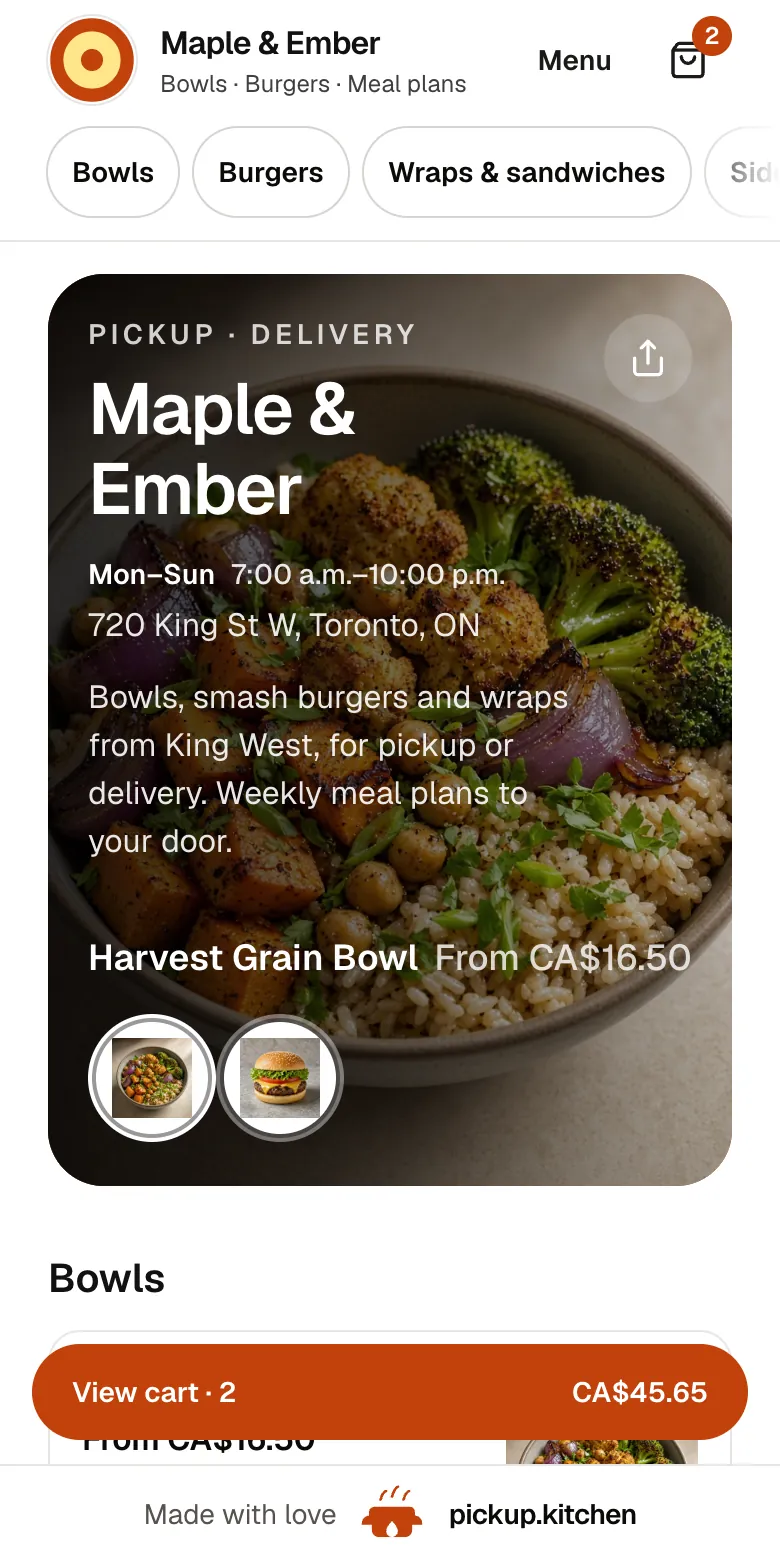
Your menu, on your own site
yourname.pickup.kitchen shows your dishes with photos and prices, and each guest picks pickup or delivery.
See how it works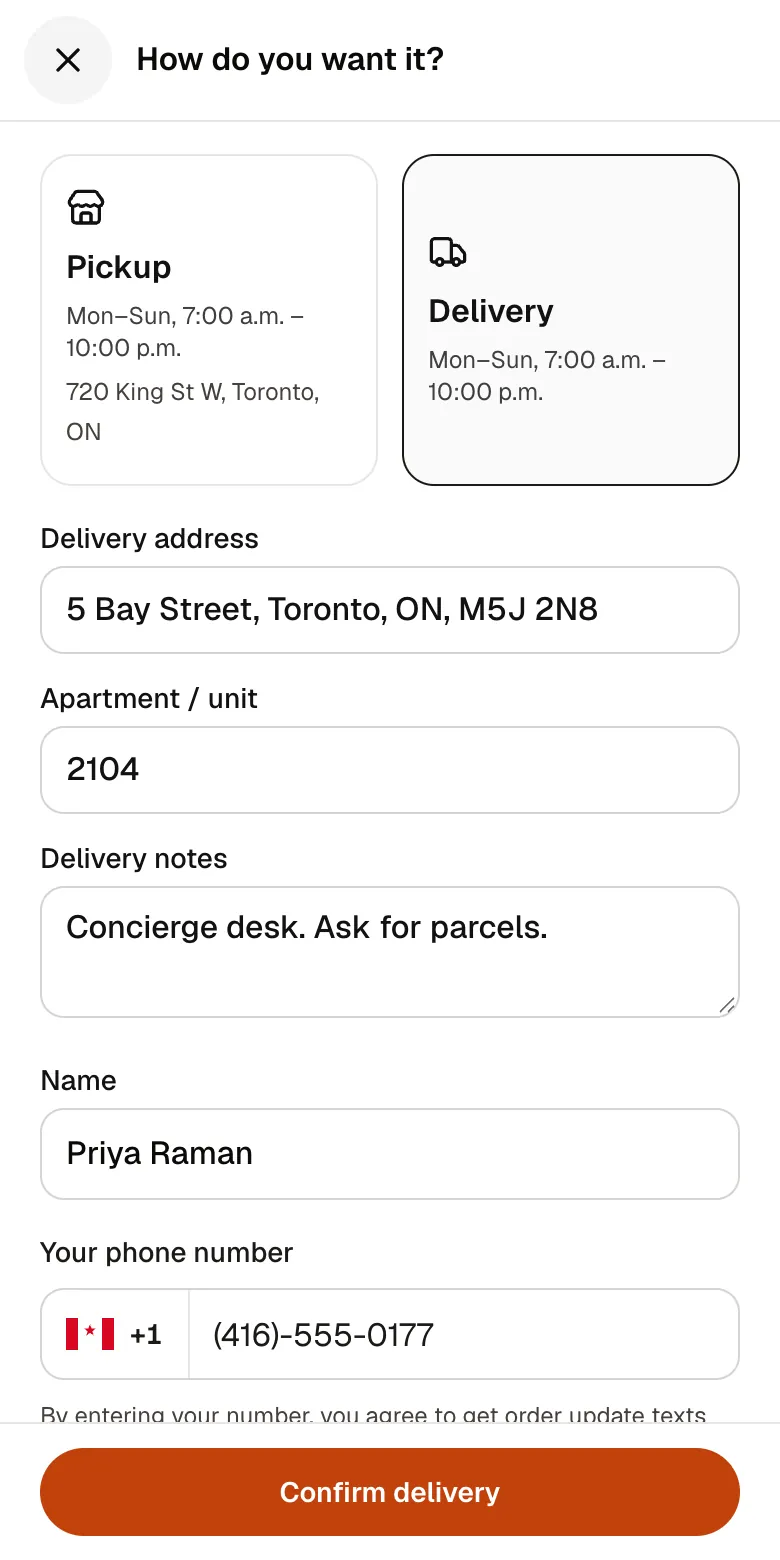
2Your guests
A checkout that takes seconds
A pickup time or a delivery address, then pay by card. No app to install and no account before paying.
See how it works
FAQ
Questions
Do I need a license to sell baked goods from home in Texas?
No. Texas cottage food operations do not need a license or permit, and local health departments cannot inspect you or charge a fee for direct sales. You do need an accredited food handler course. Registration with DSHS is required only if you sell TCS foods.
How much can you make selling food from home in Texas?
DSHS says the annual gross income threshold is $150,000 under SB 541, which took effect September 1, 2025. The bill struck the old $50,000 limit and provides for inflation adjustments, so check DSHS for the current figure.
Can I sell cottage food online in Texas?
Yes, with a condition. The customer buys online from you, and you, an employee or a household member personally delivers the food. The required label information must be on your website before you take payment.
Can I ship cottage food in Texas?
The DSHS page does not describe shipping. Its online-sales rule depends on personal delivery by you, an employee or a household member, so a carrier shipment is not covered. Ask DSHS before you ship.
Can I sell cottage food to stores or restaurants in Texas?
Only through a registered cottage food vendor. You may sell non-TCS foods to that vendor at wholesale, and the vendor can sell to consumers at a farmers' market, farm stand, food service establishment or retail store.
What does a Texas cottage food label need to say?
It needs your name, your address or registration number, the product's common name, major allergens, and the line "THIS PRODUCT WAS PRODUCED IN A PRIVATE RESIDENCE THAT IS NOT SUBJECT TO GOVERNMENTAL LICENSING OR INSPECTION." TCS foods also need the date made and a safe-handling statement.
Keep reading
- GuideCottage food laws by state: caps, permits, online salesCottage food laws explained: what they are, the rules most states share, how to start selling from home, and a 15-state table of caps and permits.
- By businessSell food from home: your own ordering pageSell food from home with a weekly menu, an order cutoff and pickup windows on your own link. Cottage food rules explained. Free onboarding, 10% per order.
- GuideHow to start a bakery business from homeHow to start a bakery business from home: check your cottage food rules, pick bakes that qualify, label and price them, take pre-orders. Steps and sources.
- ProductOnline ordering system for restaurantsAn online ordering system for restaurants: your own site at yourname.pickup.kitchen, time slots that close when full, and a kitchen screen. 10% per order.
- By businessBakery POS with online pre-ordersBakery POS that takes counter sales and online pre-orders on one menu, with pickup windows, an order cutoff and a stock count for each item. 10% per order.
Free onboarding. Pay as you use.
Take orders from your home kitchen
Set pickup windows and delivery, publish your label details, and take your first orders on your own site.