Cottage food law · Indiana
Indiana cottage food law: home-based vendor rules
The Indiana cottage food law is the home-based vendor law, IC 16-42-5.3. It lets you make non-refrigerated foods at your primary home and sell them in person, by phone or online, with delivery in person, by mail or by third-party carrier. You need an ANSI-accredited food handler certificate. The pages we read set no sales cap.
Free onboarding. Pay as you use. No monthly fee for ordering.
The short version
- Food handler certificate from an ANSI-accredited issuer, valid three years
- Sell in person, by phone or online; ship only within Indiana
- Label must say the production area has not been inspected by the state
Indiana at a glance
Checked November 2026- The law
- Home-based vendor (IC 16-42-5.3, House Enrolled Act 1149)
- Sales cap
- No dollar cap stated in the state guidance we read.
- Registration or permit
- No state license or registration described in the state rules we read; some local health departments add requirements.
- Selling online
- Allowed: sales in person, by telephone or through the Internet.
- Delivery
- In person, by mail or by a third-party carrier.
- Shipping
- Within Indiana only; tamper-resistant packaging; keep shipping records at least one year.
- Training
- Food handler certificate from an ANSI-accredited issuer, valid three years.
- Label statement
- This product is home produced and processed and the production area has not been inspected by Indiana Department of Health. NOT FOR RESALE. (at least 10-point type)
- In effect
- HEA 1149 (2022) replaced the original rule; whole, uncut produce left the home-based vendor rules July 1, 2023.
Checked against the official source in November 2026. This is a plain-English summary, not legal advice. Rules change, so confirm with your state or county before you sell.
What you can sell
Purdue's Indiana Home-Based Vendor guidance, which follows the state rules, says products must be made, grown or raised by you at your primary residence. Allowed foods are non-TCS foods that do not need refrigeration. As of July 1, 2023, whole, uncut produce is no longer regulated under the home-based vendor rules at all.
- Baked items, candy and confections
- Tree nuts, legumes, honey, molasses and maple syrup
- Traditional jams and jellies from high-acid fruit with full-sugar recipes
- Shelf-stable canned goods and fruit jams, according to the Harrison County Health Department's summary of the rule
What you can't sell
Home-based vendors may not sell TCS foods, meaning foods that need time and temperature control for safety. Purdue's examples are raw or heat-treated animal foods, heat-treated plant foods, raw seed sprouts, cut melon, cut leafy greens and garlic in oil.
You also cannot resell other people's food. Anyone who resells must be licensed as a wholesaler.
Registration, training and costs
The state rules we read do not describe a registration or license for home-based vendors, and no fee is listed. If you sell in-shell eggs, you must register with the Indiana State Egg Board. Poultry and rabbit sold at farmers' markets or roadside stands have their own rules.
You must get a food handler certificate from a certificate issuer accredited by ANSI. ServSafe Food Handler qualifies, and the certificate is valid for three years. Local health departments may add requirements, and some ask vendors to test pH and water activity, so call yours.
The label you print tells buyers that the production area has not been inspected by the state.
Where and how you can sell
Purdue's page says you may sell "in person, by telephone, or through the Internet." Delivery may be "in person, by mail, or by a third-party carrier." Products can only be shipped within Indiana. Interstate shipping is prohibited.
The Harrison County Health Department's summary of the rule adds that shipped products need tamper-resistant packaging and that you keep shipping records for at least one year. You may sell at farmers' markets and roadside stands. Products may not be resold.
Labels
Labels must include your name and address, the common name of the food, ingredients in descending order by weight, net weight or volume, and the processing date. The required statement must be in at least 10-point type. Purdue gives it as: "This product is home produced and processed and the production area has not been inspected by Indiana Department of Health," followed by "NOT FOR RESALE."
State guidance documents word this statement slightly differently, so copy it from the IDOH Home-Based Vendor Handbook before you print.
Getting started checklist
- Check every product is non-TCS and made at your primary residence.
- Get an ANSI-accredited food handler certificate and keep it current.
- Call your county health department and ask about local steps, such as pH or water activity testing.
- Print labels with the processing date and the home-produced statement.
- If you ship, use tamper-resistant packaging, ship only within Indiana, and keep records for a year.
- Register with the State Egg Board if you sell eggs.
- Check your city's zoning for home businesses.
How pickup.kitchen fits the Indiana rules
Indiana names telephone and internet sales, so an ordering site fits. pickup.kitchen gives you yourname.pickup.kitchen with a menu, photos and checkout, with payments to your own Stripe account.
Pickup windows suit door pickup and market days. Slots close when full, and order cutoffs let you plan a weekly bake. Delivery in person is on the list, so the delivery tools can plan your own route and send it to your phone, with a photo at the door.
Your customer list keeps every buyer, ready for your next email. Keep orders inside Indiana, and make sure your label carries the processing date. Free onboarding, pay as you use.
What we checked, and when
Checked November 2026 against the official Indiana sources linked below. Laws change, so open the official page before you print labels or take your first order.
This is a plain-language summary, not legal advice. Check with your state and county before you sell.
Real screens
Take orders from your home kitchen
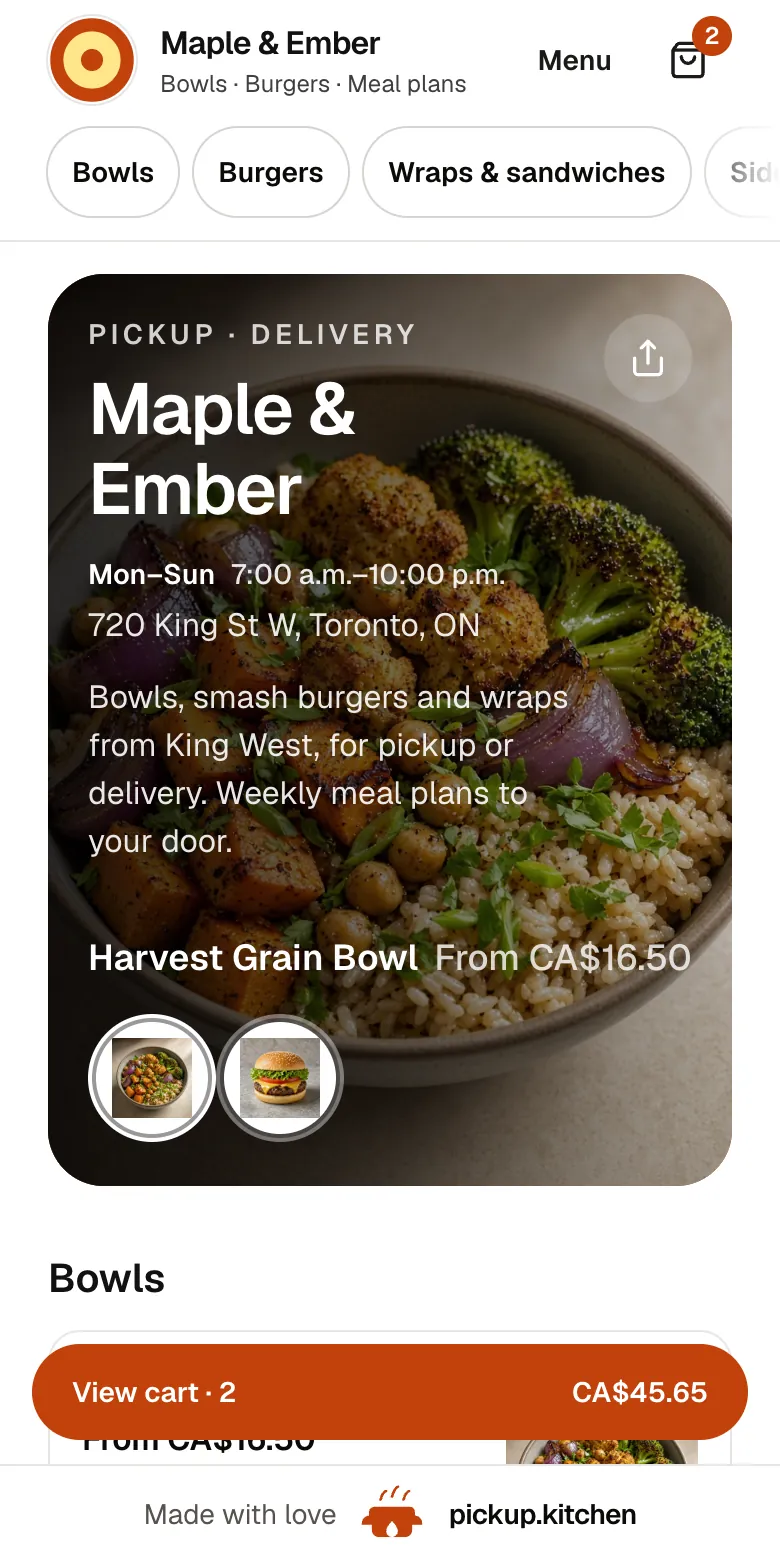
1Your guests
Your menu, on your own site
yourname.pickup.kitchen shows your dishes with photos and prices, and each guest picks pickup or delivery.
See how it works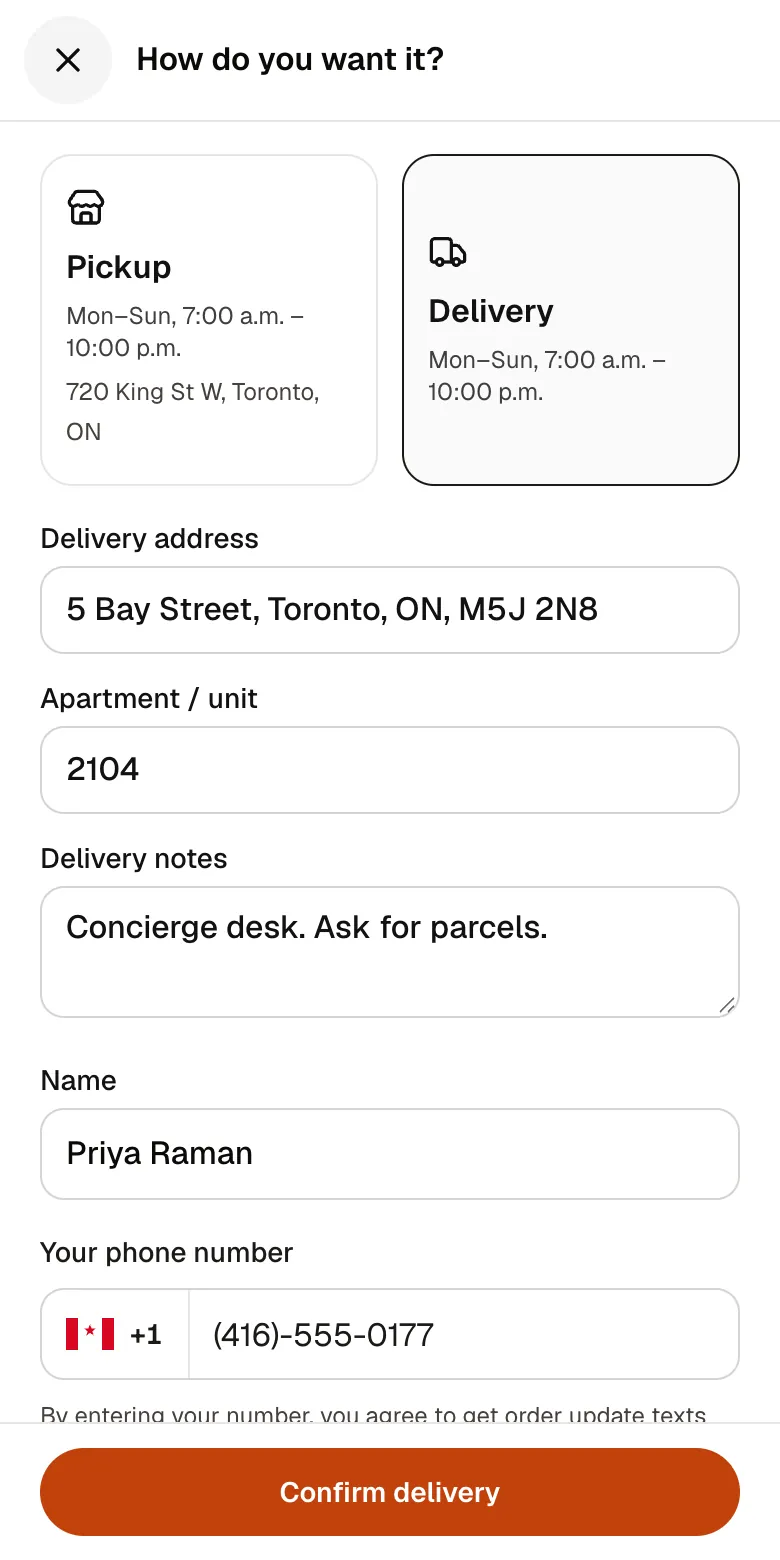
2Your guests
A checkout that takes seconds
A pickup time or a delivery address, then pay by card. No app to install and no account before paying.
See how it works
FAQ
Questions
Do I need a license to sell baked goods from home in Indiana?
The home-based vendor rules we read do not require a state license or registration. You need an ANSI-accredited food handler certificate, and your county health department may add local requirements.
Is there a sales limit for Indiana home-based vendors?
The state pages we read mention no dollar sales cap. Check IC 16-42-5.3 and your county health department.
Can I sell cottage food online in Indiana?
Yes. Purdue's guidance says home-based vendors may sell in person, by telephone or through the Internet.
Can I ship cottage food in Indiana?
Only within Indiana. Interstate shipping is prohibited, and shipped products need tamper-resistant packaging. Keep shipping records for at least one year.
What foods can't I sell as an Indiana home-based vendor?
TCS foods such as raw or heat-treated animal foods, raw seed sprouts, cut melon, cut leafy greens and garlic in oil. You also cannot resell other people's products.
What does an Indiana home-based vendor label need?
Your name and address, the product name, ingredients by weight, net weight or volume, the processing date, and a statement in at least 10-point type that the production area has not been inspected by the Indiana Department of Health.
Keep reading
- GuideCottage food laws by state: caps, permits, online salesCottage food laws explained: what they are, the rules most states share, how to start selling from home, and a 15-state table of caps and permits.
- By businessSell food from home: your own ordering pageSell food from home with a weekly menu, an order cutoff and pickup windows on your own link. Cottage food rules explained. Free onboarding, 10% per order.
- GuideHow to start a bakery business from homeHow to start a bakery business from home: check your cottage food rules, pick bakes that qualify, label and price them, take pre-orders. Steps and sources.
- ProductOnline ordering system for restaurantsAn online ordering system for restaurants: your own site at yourname.pickup.kitchen, time slots that close when full, and a kitchen screen. 10% per order.
- By businessBakery POS with online pre-ordersBakery POS that takes counter sales and online pre-orders on one menu, with pickup windows, an order cutoff and a stock count for each item. 10% per order.
Free onboarding. Pay as you use.
Take orders from your home kitchen
Set pickup windows and delivery, publish your label details, and take your first orders on your own site.