Cottage food law · Tennessee
Tennessee cottage food law: the Food Freedom Act
The Tennessee cottage food law, known as the Tennessee Food Freedom Act, exempts homemade food from state licensing, permitting, inspection, packaging and labeling laws if you meet its conditions. Public Chapter 431 took effect July 1, 2025 and widened what you can make. You can sell online, but the delivery rules depend on whether the food contains dairy, meat or poultry.
Free onboarding. Pay as you use. No monthly fee for ordering.
The short version
- No license, permit or inspection if you meet the law's conditions
- Public Chapter 431 took effect July 1, 2025
- Foods with dairy, meat or poultry must be sold and delivered by you
Tennessee at a glance
Checked November 2026- The law
- Tennessee Food Freedom Act (T.C.A. 53-1-118; Public Chapter 431)
- Registration or permit
- None. Exempt from state licensing, permitting, inspecting, packaging and labeling laws if the law's conditions are met.
- Selling online
- Allowed: you may sell remotely, including by telephone or internet.
- Delivery
- Foods without dairy, meat or poultry: by you, an agent, a third-party vendor or a third-party carrier. Foods with dairy, meat or poultry: by you.
- Shipping
- Third-party carrier delivery allowed for foods without dairy, meat or poultry.
- Training
- None in the bill text.
- Label statement
- This product was produced at a private residence that is exempt from state licensing and inspection. This product may contain allergens.
- In effect
- Public Chapter 431, signed May 15, 2025, effective July 1, 2025.
Checked against the official source in November 2026. This is a plain-English summary, not legal advice. Rules change, so confirm with your state or county before you sell.
What you can sell
Tennessee calls it a "homemade food item." Under T.C.A. 53-1-102, as changed by Public Chapter 431, it is food produced by you, or under your direct supervision, at your private residence. It can be either a non-TCS food or a time and temperature control for safety (TCS) food, as the Department of Agriculture defines them by rule.
That is wider than most states, which only allow shelf-stable foods. The legislature's summary of the bill, as amended in the Senate, adds a condition for TCS foods. They must be sold in person, by you or by an agent, such as a farm stand on the property where the food was prepared.
What you can't sell
The definition excludes these, except to the extent federal law allows the sale:
- Alcoholic beverages and foods that are or contain alcohol
- Unpasteurized milk
- Fish and shellfish products
- Meat and meat by-products, unless from an inspected source
- Poultry and poultry by-products, unless you raised the poultry under the 1,000-bird exemption or the poultry is from an inspected source
Registration and costs
The law exempts the production and sale of homemade food items from all state licensing, permitting, inspecting, packaging and labeling laws. The exception is when the Department of Health is investigating a reported foodborne illness. The exemption only applies if you meet the sale, delivery, information and temperature conditions below.
The bill text we read sets no registration, no fee, no training requirement and no sales cap. Check your city and county for zoning rules, which the law does not address.
Where and how you can sell
Foods without dairy, meat or poultry can be sold by you to the consumer, in person or remotely, including by telephone or internet. They can also be sold by an agent or a third-party vendor such as a retail shop or grocery store. They can be delivered by you, an agent, a third-party vendor or a third-party carrier.
Foods that contain dairy, meat or poultry must be sold by you to the consumer, in person or remotely including by telephone or internet, and delivered by you. Many baked goods contain butter or milk, so most bakers will fall under the stricter rule. If you are unsure how an item is treated, ask the Department of Agriculture.
If a TCS food is transported before final delivery, it must be kept at an appropriate temperature.
Labels and information
You must give the buyer your name, home address and telephone number. Add the common name of the food and its ingredients in descending order of predominance. For TCS foods only, add the date it was produced. You must also give this statement: "This product was produced at a private residence that is exempt from state licensing and inspection. This product may contain allergens."
Where the information goes depends on how you sell. Use a label if the food is packaged. Use a label on the container if it is sold from a bulk container. Use a placard at the point of sale if it is neither. Use the webpage where the food is offered if you only sell on the internet. For phone or custom orders, you can disclose the exempt-residence statement and keep the rest ready on request.
Getting started checklist
- Decide whether each item contains dairy, meat or poultry. That sets who can sell and deliver it.
- Confirm none of your products is alcohol, raw milk, fish, shellfish, or uninspected meat or poultry.
- Write the information block with your name, address, phone, food name, ingredients and the exact statement.
- Post that block on your menu page if you only sell online.
- Add a production date for any TCS food.
- Keep TCS foods at a safe temperature in transit and plan to sell them in person.
- Check your city or county for zoning and home-business rules.
How pickup.kitchen fits the Tennessee rules
Tennessee names sales by telephone and internet, and lets you post the required information on the webpage when you sell only online. pickup.kitchen gives you yourname.pickup.kitchen with a menu, checkout and payments to your own Stripe account. Paste the statement, ingredients and contact details into each dish description.
For dairy items, delivery must be by you. The delivery tools plan your route and send it to your own phone, with a photo at the door. Pickup windows suit door pickup and weekly drops, and slots close when full.
If you sell TCS foods, the Senate-amended bill says in person, so use pickup windows rather than delivery for those items and confirm with the Department of Agriculture. Your customer list keeps every buyer. Free onboarding, pay as you use.
What we checked, and when
Checked November 2026 against the official Tennessee sources linked below. Laws change, so open the official page before you print labels or take your first order.
We could not open the enrolled Public Chapter 431 PDF directly, so the Tennessee details come from the bill text, the Senate amendment and the legislature's bill summary. Read the enrolled version before you rely on a fine point.
This is a plain-language summary, not legal advice. Check with your state and county before you sell.
Real screens
Take orders from your home kitchen
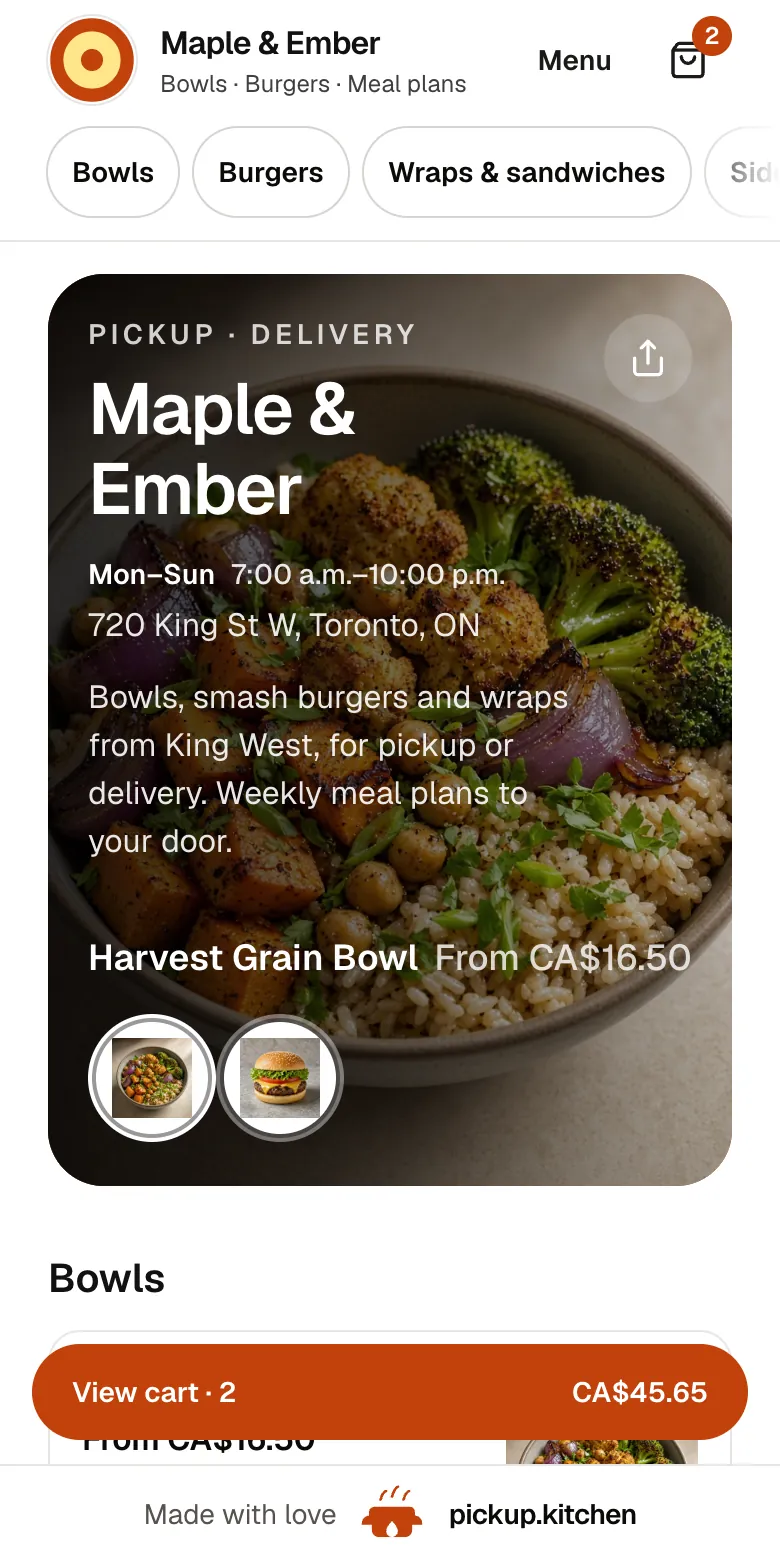
1Your guests
Your menu, on your own site
yourname.pickup.kitchen shows your dishes with photos and prices, and each guest picks pickup or delivery.
See how it works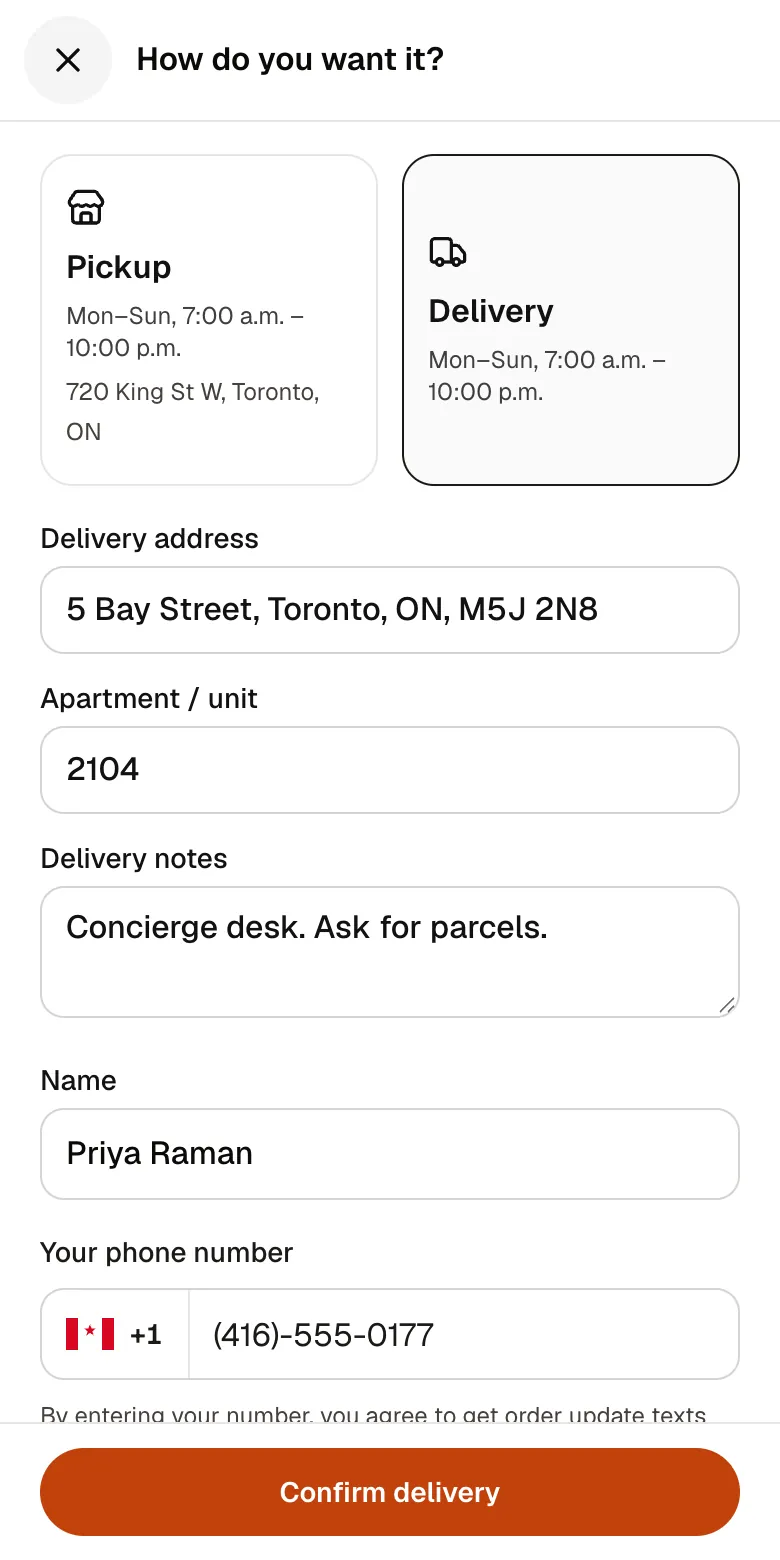
2Your guests
A checkout that takes seconds
A pickup time or a delivery address, then pay by card. No app to install and no account before paying.
See how it works
FAQ
Questions
Do I need a license to sell baked goods from home in Tennessee?
No. The Tennessee Food Freedom Act exempts homemade food from state licensing, permitting, inspecting, packaging and labeling laws if you meet its conditions. You still have to provide your information and the exempt-residence statement.
Can I sell cottage food online in Tennessee?
Yes. Food without dairy, meat or poultry can be sold by you remotely, including by telephone or internet. Food with dairy, meat or poultry must be sold by you to the consumer, and delivered by you.
Can I ship cottage food in Tennessee?
For foods without dairy, meat or poultry, the law allows delivery by a third-party carrier. Foods with dairy, meat or poultry must be delivered by you.
Can I sell cottage food to stores in Tennessee?
Foods without dairy, meat or poultry may be sold through an agent or a third-party vendor such as a retail shop or grocery store. Foods with dairy, meat or poultry must be sold by you to the consumer.
What does a Tennessee cottage food label need to say?
Your name, home address and telephone number, the food's common name, ingredients, a production date for TCS foods, and the statement that the product was produced at a private residence exempt from state licensing and inspection and may contain allergens.
Keep reading
- GuideCottage food laws by state: caps, permits, online salesCottage food laws explained: what they are, the rules most states share, how to start selling from home, and a 15-state table of caps and permits.
- By businessSell food from home: your own ordering pageSell food from home with a weekly menu, an order cutoff and pickup windows on your own link. Cottage food rules explained. Free onboarding, 10% per order.
- GuideHow to start a bakery business from homeHow to start a bakery business from home: check your cottage food rules, pick bakes that qualify, label and price them, take pre-orders. Steps and sources.
- ProductOnline ordering system for restaurantsAn online ordering system for restaurants: your own site at yourname.pickup.kitchen, time slots that close when full, and a kitchen screen. 10% per order.
- By businessBakery POS with online pre-ordersBakery POS that takes counter sales and online pre-orders on one menu, with pickup windows, an order cutoff and a stock count for each item. 10% per order.
Free onboarding. Pay as you use.
Take orders from your home kitchen
Set pickup windows and delivery, publish your label details, and take your first orders on your own site.