Cottage food law · North Carolina
North Carolina cottage food law: the home processor program
The North Carolina cottage food law works through the home processor program run by the NC Department of Agriculture and Consumer Services (NCDA&CS). You apply, an inspector visits, and you get an inspection report instead of a permit. Only low-risk foods are allowed in a home kitchen. The page we read does not state a sales cap or a fee.
Free onboarding. Pay as you use. No monthly fee for ordering.
The short version
- Apply to NCDA&CS; no permit is issued, but you get an inspection report
- Only low-risk foods; no refrigerated or frozen products
- No pets in the home if you manufacture food there
North Carolina at a glance
Checked November 2026- The law
- Home processor program (NCDA&CS Food and Drug Protection Division)
- Registration or permit
- Apply to NCDA&CS; no permit is issued; inspectors give you a copy of the inspection report.
- Selling online
- Not addressed on the NCDA&CS home processor page; sales to consumers, retail stores and restaurants are covered.
- Delivery
- Consumer pickup from the home and delivery are mentioned.
- Shipping
- Shipping by USPS or FedEx requires labels; out-of-state sales are not addressed.
- Training
- No general food-handler training stated; an Acidified Food Course may be required for acidified foods.
- Label statement
- No set statement on the page; labels need product name, your name and address, net weight in ounces or pounds and grams, ingredients and allergens.
Checked against the official source in November 2026. This is a plain-English summary, not legal advice. Rules change, so confirm with your state or county before you sell.
What you can sell
NCDA&CS says low-risk foods are the only products allowed in a home kitchen. Its examples are shelf-stable baked goods, jams and preserves, candies, dry mixes and spices, some liquids, some sauces and freeze-dried candies.
Sauces must first be tested for shelf stability. If you want to make pickles or other acidified foods, contact the office first. You may be asked to take an Acidified Food Course.
What you can't sell
NCDA&CS says high-risk food products are not permitted in your home kitchen. It lists these exclusions:
- Refrigerated or frozen products
- Low-acid canned goods
- Dairy and seafood
- Bottled water or juice
- Cream or cream-cheese-filled bakery items and cheesecakes
Applying, inspections and costs
NCDA&CS says "a permit is not issued, but inspectors will provide the home processor with a copy of the inspection report." You apply by email to homeprocessing@ncagr.gov or by mail, using the home processor application. NCDA&CS says a Food Regulatory Specialist will contact you within about 8 to 12 weeks. The page does not list a fee.
If you use a municipal water supply, send a recent water bill or a letter from your leasing office. If you use a private well, send coliform and E. coli results from a certified lab dated within a year of your application. Store-bought test kits are not accepted.
NCDA&CS says you cannot manufacture food from your home kitchen if a pet enters the home at any time, including overnight. Kitchens in a garage, basement or separate building do not qualify. No general food-handler training requirement is stated on the page.
Check with your local or county planning department before you start. Also check HOA and lease rules.
Where and how you can sell
The NCDA&CS page covers sales to retail stores, restaurants and directly to consumers. It mentions consumer pickup from your home, delivery and special events such as weddings. Farmers' markets are mentioned too, and over-the-counter products may be exempt from labeling.
If you ship by USPS or FedEx, products need labels. The page does not mention online ordering or out-of-state sales, so ask NCDA&CS when you apply.
Labels
Labels are required for individually packaged self-service products, wholesale sales and shipped products. The only exemption from an affixed label is food sold on demand directly to the customer.
- The product name
- Your name and address as manufacturer
- Net weight in ounces or pounds and in grams
- A complete ingredient list
- All allergens in the ingredient statement or a "Contains" statement
- Nutrition labels only if you make nutritional claims
Getting started checklist
- Confirm every product is low-risk and shelf-stable.
- Make sure no pet ever enters the home where you cook.
- Get your water proof: a recent bill, or a well test within a year.
- Email the home processor application to NCDA&CS and plan for 8 to 12 weeks.
- Check county planning, HOA and lease rules.
- Design labels for anything you ship, sell wholesale or leave on a self-service table.
- Ask NCDA&CS in writing whether online ordering is covered.
How pickup.kitchen fits the North Carolina rules
NCDA&CS describes consumer pickup from the home, delivery and special events. pickup.kitchen is built for that: your own site at yourname.pickup.kitchen, a menu with photos, pickup windows, and payments to your own Stripe account.
Because the page does not spell out online ordering, ask NCDA&CS when you apply, and keep the answer. While your application is processed, set up your menu and slots so you are ready to open. Slots close when full, so a weekly drop stays small.
If you deliver, the delivery tools plan your route and send it to your phone, with a photo at the door. Your customer list keeps every buyer for the next batch. Free onboarding, pay as you use.
What we checked, and when
Checked November 2026 against the official North Carolina sources linked below. Laws change, so open the official page before you print labels or take your first order.
This is a plain-language summary, not legal advice. Check with your state and county before you sell.
Real screens
Take orders from your home kitchen
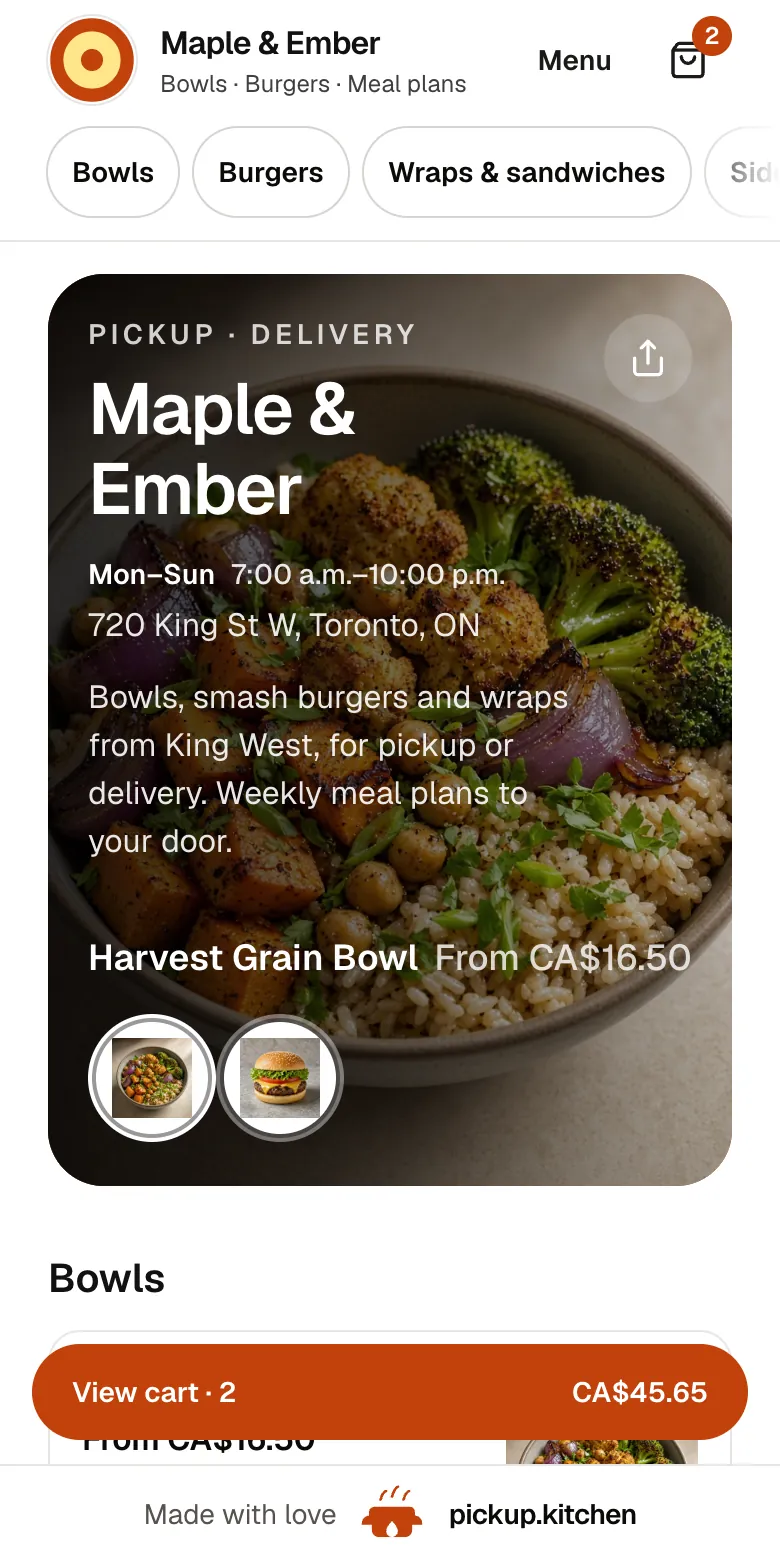
1Your guests
Your menu, on your own site
yourname.pickup.kitchen shows your dishes with photos and prices, and each guest picks pickup or delivery.
See how it works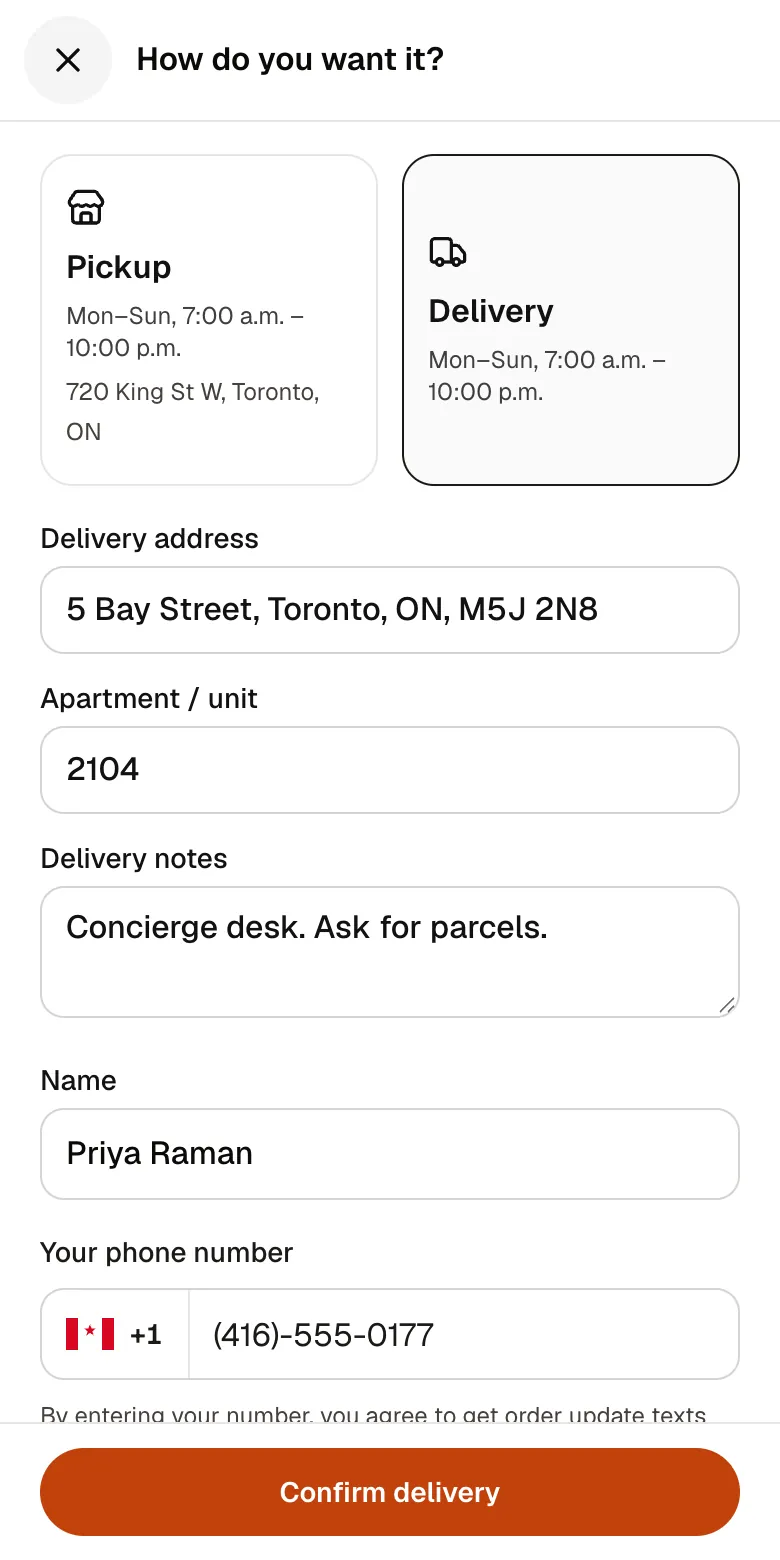
2Your guests
A checkout that takes seconds
A pickup time or a delivery address, then pay by card. No app to install and no account before paying.
See how it works
FAQ
Questions
Do I need a license to sell baked goods from home in North Carolina?
NCDA&CS does not issue a permit to home processors, but you must apply and an inspector provides an inspection report. Only low-risk foods are allowed in a home kitchen.
Can I sell cottage food online in North Carolina?
The NCDA&CS home processor page does not address online ordering. It describes sales to consumers with pickup from home, delivery and shipping. Ask NCDA&CS when you apply.
Can I ship cottage food in North Carolina?
The page says products shipped by USPS or FedEx need labels. It does not address out-of-state shipping, so confirm with NCDA&CS.
Can I sell cottage food to stores and restaurants in North Carolina?
Yes, the NCDA&CS page covers sales to retail stores, restaurants and directly to consumers. Wholesale sales need labels.
What foods can't I make at home to sell in North Carolina?
Refrigerated or frozen products, low-acid canned goods, dairy, seafood, bottled water or juice, and cream or cream-cheese-filled bakery items and cheesecakes.
Can I have a pet and make food at home to sell in North Carolina?
NCDA&CS says you cannot manufacture foods from your home kitchen if a pet enters the home at any time, including overnight.
Keep reading
- GuideCottage food laws by state: caps, permits, online salesCottage food laws explained: what they are, the rules most states share, how to start selling from home, and a 15-state table of caps and permits.
- By businessSell food from home: your own ordering pageSell food from home with a weekly menu, an order cutoff and pickup windows on your own link. Cottage food rules explained. Free onboarding, 10% per order.
- GuideHow to start a bakery business from homeHow to start a bakery business from home: check your cottage food rules, pick bakes that qualify, label and price them, take pre-orders. Steps and sources.
- ProductOnline ordering system for restaurantsAn online ordering system for restaurants: your own site at yourname.pickup.kitchen, time slots that close when full, and a kitchen screen. 10% per order.
- By businessBakery POS with online pre-ordersBakery POS that takes counter sales and online pre-orders on one menu, with pickup windows, an order cutoff and a stock count for each item. 10% per order.
Free onboarding. Pay as you use.
Take orders from your home kitchen
Set pickup windows and delivery, publish your label details, and take your first orders on your own site.