Cottage food law · South Carolina
South Carolina cottage food law: sell home-baked food
The South Carolina cottage food law, called home-based food production, lets you sell non-potentially hazardous foods made in your home kitchen. You need no retail food permit from the South Carolina Department of Agriculture (SCDA). The statute sets no sales cap, and since May 2022 it covers online and mail order sales and sales to retail stores.
Free onboarding. Pay as you use. No monthly fee for ordering.
The short version
- No permit, license or registration; an SCDA ID number is available on request
- No annual sales cap in S.C. Code 44-1-143
- Online and mail order sales allowed, within South Carolina
South Carolina at a glance
Checked November 2026- The law
- Home-based food production, "cottage law" (S.C. Code Ann. section 44-1-143)
- Sales cap
- No annual dollar cap in section 44-1-143
- Registration or permit
- No permit, license, certificate or registration. SCDA issues a Home-based Food ID number on request.
- Selling online
- Allowed: directly to a person, including online and by mail order, or to retail stores; within South Carolina.
- Delivery
- Not specifically addressed in section 44-1-143.
- Shipping
- Mail order allowed, within South Carolina.
- Label statement
- PROCESSED AND PREPARED BY A HOME-BASED FOOD PRODUCTION OPERATION THAT IS NOT SUBJECT TO SOUTH CAROLINA'S FOOD SAFETY REGULATIONS. (all capital letters, contrasting color)
- In effect
- Act 208 of 2022, effective May 23, 2022 (online, mail order, retail stores). SCDA fact sheet dated May 1, 2026.
Checked against the official source in November 2026. This is a plain-English summary, not legal advice. Rules change, so confirm with your state or county before you sell.
What you can sell
SCDA's May 2026 fact sheet describes home-based food production, often called cottage food. It means preparing non-potentially hazardous foods in a residential kitchen for sale to consumers or retail stores within South Carolina. SCDA's FAQ says the foods are generally baked goods without cream fillings, candies, cookies and most breads.
- Shelf-stable cakes, cookies and cupcakes
- Dried herbs and spices
- Pie and pie fillings, if high acid
- Roasted nuts
- Sourdough bread made with a commercial sourdough starter
What you can't sell
SCDA says making any food that is not allowed will require a permit. Its fact sheet lists these as not allowed. It also points to its Home-based Food Production Law Guidance for a fuller list.
- Time and temperature controlled foods, such as casseroles, meats, seafood and ice cream
- Bottled beverages
- Cheesecake
- Charcuterie boards
- Hot sauce and BBQ sauce
Registration and costs
SCDA says it "does not issue permits, licenses, certificates, or registrations" to home-based food producers. It will give you a Home-based Food ID number on request, and you can put that number on your label instead of your address. SCDA's page does not list a fee for the number.
The statute, S.C. Code section 44-1-143, sets no annual sales cap. It says a home-based food operation is not a retail food establishment and is not regulated under Regulation 61-25. It applies "in the absence of a local ordinance to the contrary," so check your city or county.
SCDA's pages do not list a training requirement.
Where and how you can sell
Section 44-1-143(E) says you may sell "directly to a person, including online and by mail order, or to retail stores," including grocery stores. The change came from Act 208, effective May 23, 2022. SCDA's fact sheet adds that the sales are within South Carolina.
Retail stores that carry your product must sell it in its original packaging and post a clear sign that home-based products are not subject to commercial food regulations. A restaurant can serve your food or use it as an ingredient only with a variance approved by SCDA.
The statute does not single out delivery, so check with SCDA before using a courier or delivery app.
Labels
The label must include a statement in all capital letters, in a color that contrasts clearly with the background: "PROCESSED AND PREPARED BY A HOME-BASED FOOD PRODUCTION OPERATION THAT IS NOT SUBJECT TO SOUTH CAROLINA'S FOOD SAFETY REGULATIONS."
- Your name and address, or your SCDA Home-based Food ID number
- The standard name of the product
- Ingredients in descending order of predominance by weight
- Each major allergen by name, or a disclaimer that the food may contain any major allergen; name the specific tree nut
- No health claims
Getting started checklist
- Check your product against SCDA's allowed and not-allowed lists and its guidance.
- Decide whether to request an SCDA ID number so your address is off the label.
- Print the all-caps statement exactly as written.
- Keep sales inside South Carolina.
- Ask your city or county about home-business rules.
- If a shop will stock you, give it the sign wording.
- Email SCDA at homebasedfoods@scda.sc.gov with any borderline product.
How pickup.kitchen fits the South Carolina rules
South Carolina names online sales in the statute, so an ordering site is a natural fit. pickup.kitchen gives you yourname.pickup.kitchen, a menu with photos, checkout, and payments to your own Stripe account.
Use pickup windows for door pickup, or run a weekly drop with order cutoffs and slots that close when full. Delivery tools plan a route and send it to a driver's phone, with a photo at the door, for days when you deliver. Because the statute does not address delivery directly, confirm with SCDA before you hire anyone to drive.
Your customer list keeps every buyer for the next batch. Put the all-caps statement in your dish descriptions so buyers see it before checkout. Free onboarding, pay as you use.
What we checked, and when
Checked November 2026 against the official South Carolina sources linked below. Laws change, so open the official page before you print labels or take your first order.
This is a plain-language summary, not legal advice. Check with your state and county before you sell.
Real screens
Take orders from your home kitchen
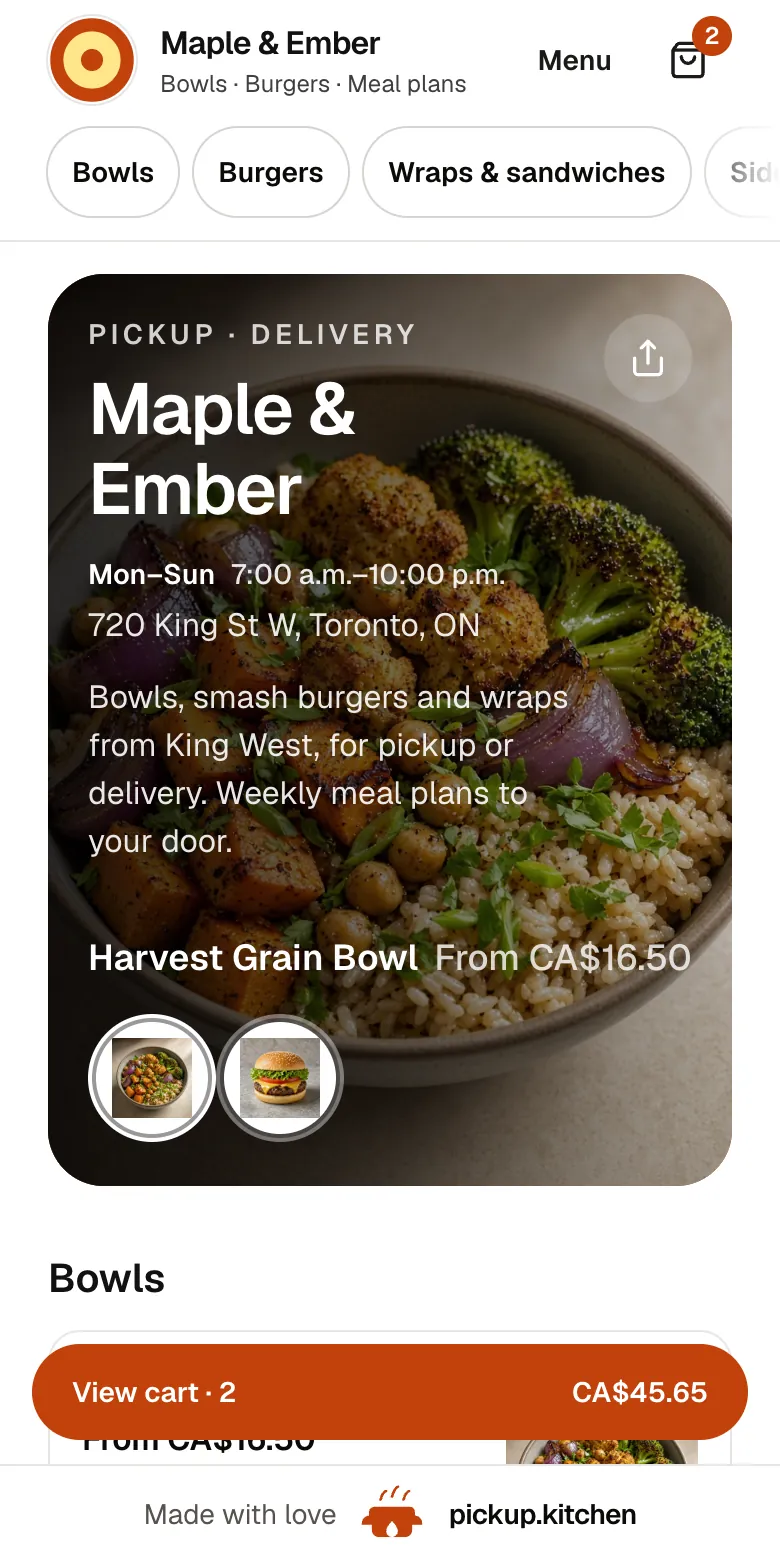
1Your guests
Your menu, on your own site
yourname.pickup.kitchen shows your dishes with photos and prices, and each guest picks pickup or delivery.
See how it works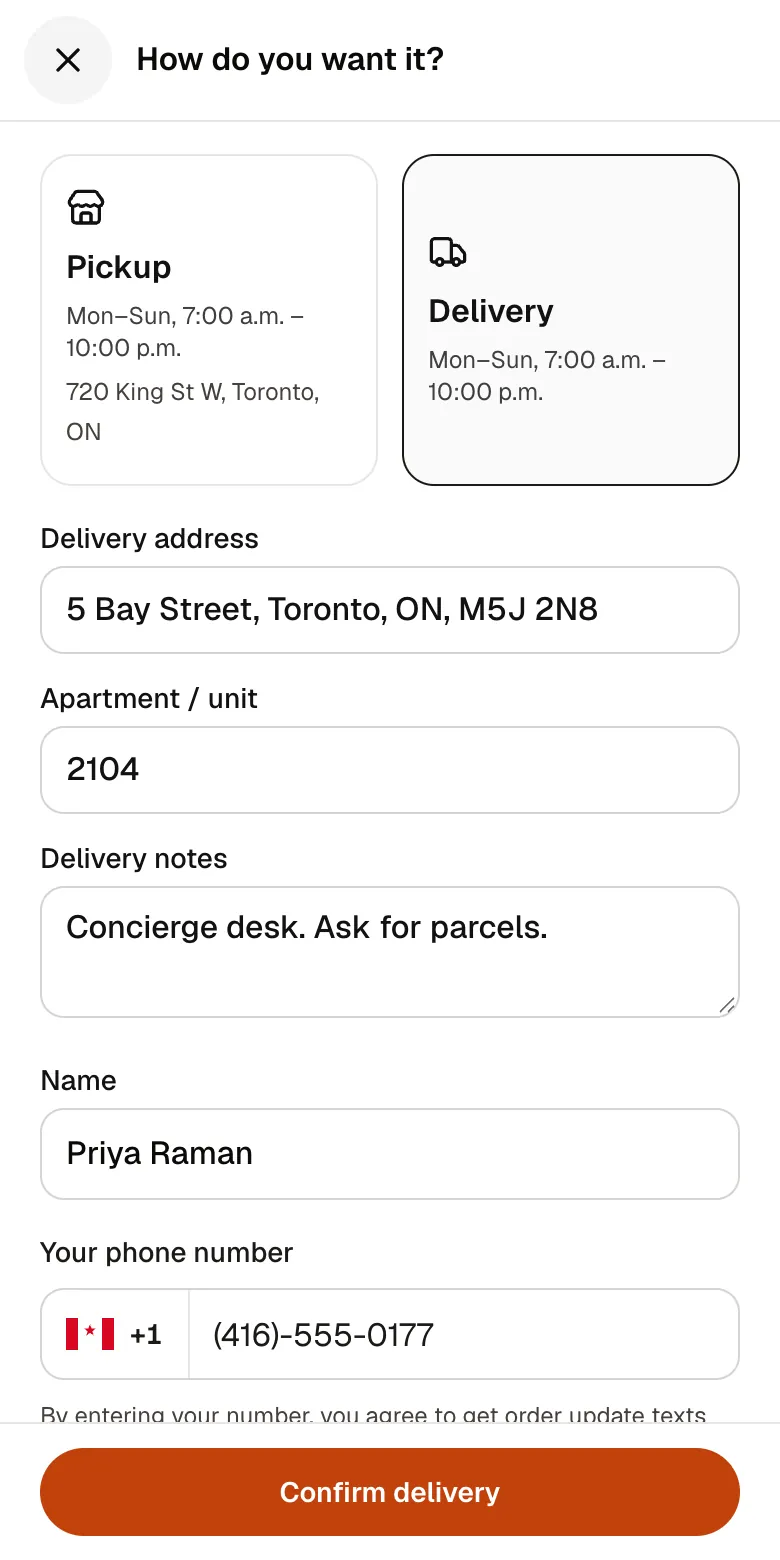
2Your guests
A checkout that takes seconds
A pickup time or a delivery address, then pay by card. No app to install and no account before paying.
See how it works
FAQ
Questions
Do I need a license to sell baked goods from home in South Carolina?
No. SCDA says it does not issue permits, licenses or registrations for home-based food production, and cottage food producers do not need a retail food permit. You can request an SCDA ID number to use on your label instead of your address.
Is there a sales limit for South Carolina cottage food?
Section 44-1-143 sets no annual sales cap. It does say the section does not apply to an operation with net earnings of less than $1,500 a year, so ask SCDA how that applies to you.
Can I sell cottage food online in South Carolina?
Yes. The statute allows sales directly to a person "including online and by mail order," and SCDA's fact sheet says the sales are within South Carolina.
Can I sell cottage food to stores in South Carolina?
Yes, since Act 208 took effect May 23, 2022. Stores must sell it in the original packaging and post a sign that the products are not subject to commercial food regulations. Restaurants need an SCDA variance.
What foods can't I make at home to sell in South Carolina?
SCDA lists TCS foods such as meats, seafood, casseroles and ice cream, plus bottled beverages, cheesecake, charcuterie boards, and hot sauce and BBQ sauce.
What does a South Carolina cottage food label need to say?
Your name and address or SCDA ID number, the product name, ingredients by weight, allergens, and the all-caps statement that the food was processed and prepared by a home-based food production operation not subject to South Carolina's food safety regulations.
Keep reading
- GuideCottage food laws by state: caps, permits, online salesCottage food laws explained: what they are, the rules most states share, how to start selling from home, and a 15-state table of caps and permits.
- By businessSell food from home: your own ordering pageSell food from home with a weekly menu, an order cutoff and pickup windows on your own link. Cottage food rules explained. Free onboarding, 10% per order.
- GuideHow to start a bakery business from homeHow to start a bakery business from home: check your cottage food rules, pick bakes that qualify, label and price them, take pre-orders. Steps and sources.
- ProductOnline ordering system for restaurantsAn online ordering system for restaurants: your own site at yourname.pickup.kitchen, time slots that close when full, and a kitchen screen. 10% per order.
- By businessBakery POS with online pre-ordersBakery POS that takes counter sales and online pre-orders on one menu, with pickup windows, an order cutoff and a stock count for each item. 10% per order.
Free onboarding. Pay as you use.
Take orders from your home kitchen
Set pickup windows and delivery, publish your label details, and take your first orders on your own site.