Cottage food law · Arizona
Arizona cottage food law: registering and selling
The Arizona cottage food law lets you sell foods made in your home kitchen. You must register with the Arizona Department of Health Services (ADHS) and keep an accredited food handler certificate current. The statute sets no dollar sales cap. Online sales need prominent label details, and dairy, meat and poultry items have stricter delivery rules.
Free onboarding. Pay as you use. No monthly fee for ordering.
The short version
- Register online with ADHS; the statute sets no sales cap
- Food handler training from an accredited program is required
- Dairy, meat and poultry must be sold by you and delivered in person
Arizona at a glance
Checked November 2026- The law
- Cottage Food Program (A.R.S. sections 36-931 to 36-933; HB 2042)
- Sales cap
- No dollar sales cap in A.R.S. 36-931 to 36-932
- Registration or permit
- Required: register with ADHS online; ADHS emails a Cottage Food Certificate.
- Fee
- None listed in ADHS's step-by-step registration guide.
- Selling online
- Allowed; online listings must show your name and registration number, ingredients, production date, the required statement and the ADHS website address.
- Delivery
- Foods without dairy, meat or poultry: by you, an agent, a third-party vendor or a third-party carrier. Dairy, meat or poultry: sold by you and delivered in person; third-party food delivery platforms excluded.
- Shipping
- Carriers allowed only for foods without dairy, meat or poultry.
- Training
- Food handler training course from an accredited program, kept active.
- Label statement
- This product was produced in a home kitchen that may come in contact with common food allergens and pet allergens and is not subject to public health inspection.
- In effect
- HB 2042 (Laws 2024, chapter 18) was approved March 29, 2024; ADHS registration guide updated February 2026.
Checked against the official source in November 2026. This is a plain-English summary, not legal advice. Rules change, so confirm with your state or county before you sell.
What you can sell
Under A.R.S. section 36-931, a cottage food product is a food prepared in a home kitchen by, or under the direct supervision of, a registered individual. ADHS's registration guide says "most foods are allowed," excluding fish, shellfish, raw milk, alcoholic beverages and marijuana-infused products. The statute covers both non-potentially hazardous foods and time or temperature controlled foods, which ADHS defines by rule.
Your home kitchen has to be a residential kitchen of the kind normally found in a home, no larger than 1,000 square feet.
What you can't sell
- Alcoholic beverages, unpasteurized milk, and foods that are or contain alcohol
- Fish and shellfish products
- Meat, meat by-products, poultry and poultry by-products, unless federal law allows the sale (for example, poultry under the 1,000-bird exemption or meat from an inspected source)
- Marijuana or marijuana by-products
- Pet food and pet treats, which cannot be registered here; ADHS refers you to the Arizona Department of Agriculture
- Anything you plan to sell as an ingredient for products at a permitted retail food establishment
Registration, training and costs
You must register with ADHS through its online system. The steps: create an account on the ADHS portal, open Cottage Food Registration, list your food products, attest to 19 statements about the law, and upload your food handler certificate. ADHS emails your Cottage Food Certificate. Its guide says to expect several weeks, and it lists no fee.
The statute requires a food handler training course from an accredited program, kept active. ADHS asks for an ANSI-accredited certificate. The 2024 law text also calls for renewal on a set cycle, so check your certificate and your portal for its date.
Local rules still count. The 2024 law does not affect local building, zoning or land-use rules, so check them before you start.
Where and how you can sell
The delivery rule depends on what you sell, under A.R.S. section 36-932(E).
- Foods without dairy, meat or poultry: sold by you or an agent, including a third-party vendor, and delivered by you, an agent, a third-party vendor or a third-party carrier.
- Dairy, meat or poultry foods: sold by you, in person or remotely including over the internet "but excluding third-party food delivery platforms," and delivered to the consumer in person.
- Foods that need time or temperature control: kept at a safe temperature in transit, moved only once, and for no longer than two hours.
- Store sales: a store must keep your products in a separate section and show a sign that they are homemade.
Labels
Products must be packaged at home with an attached label. If you sell online, the same details must appear as a prominent notification on the listing. The required statement reads: "This product was produced in a home kitchen that may come in contact with common food allergens and pet allergens and is not subject to public health inspection."
- Your name and registration number
- All ingredients and the production date
- A disclosure if the food was made in a facility for people with developmental disabilities
- A website address provided by ADHS where people can report foodborne illness and check that your registration is active
Getting started checklist
- Take an ANSI-accredited food handler course and save the certificate.
- Confirm your kitchen is a home kitchen of 1,000 square feet or less.
- Register with ADHS and wait for your certificate.
- Write your label with your name, registration number, ingredients, production date and the statement.
- Do not store products or equipment outside your home, and do not use the kitchen as a commissary.
- Sort your menu into dairy or meat items and everything else, because they have different delivery rules.
- Check city zoning and any HOA rules.
How pickup.kitchen fits the Arizona rules
Arizona's statute names remote and internet sales by the preparer, so an ordering site of your own fits. pickup.kitchen gives you yourname.pickup.kitchen, checkout, and payments to your own Stripe account. Put your name, registration number, ingredients, production date and the statement in each dish description, which covers the online notification.
For dairy and meat items, delivery has to be in person by you. The driver app lets you open your route on your phone, with a photo at the door. For other foods, Arizona allows carriers and third parties, but keep your own route for anything that needs a cold chain, since transit time limits apply.
Time slots close when full, and your customer list holds every buyer. Free onboarding, pay as you use.
What we checked, and when
Checked November 2026 against the official Arizona sources linked below. Laws change, so open the official page before you print labels or take your first order.
This is a plain-language summary, not legal advice. Check with your state and county before you sell.
Real screens
Take orders from your home kitchen
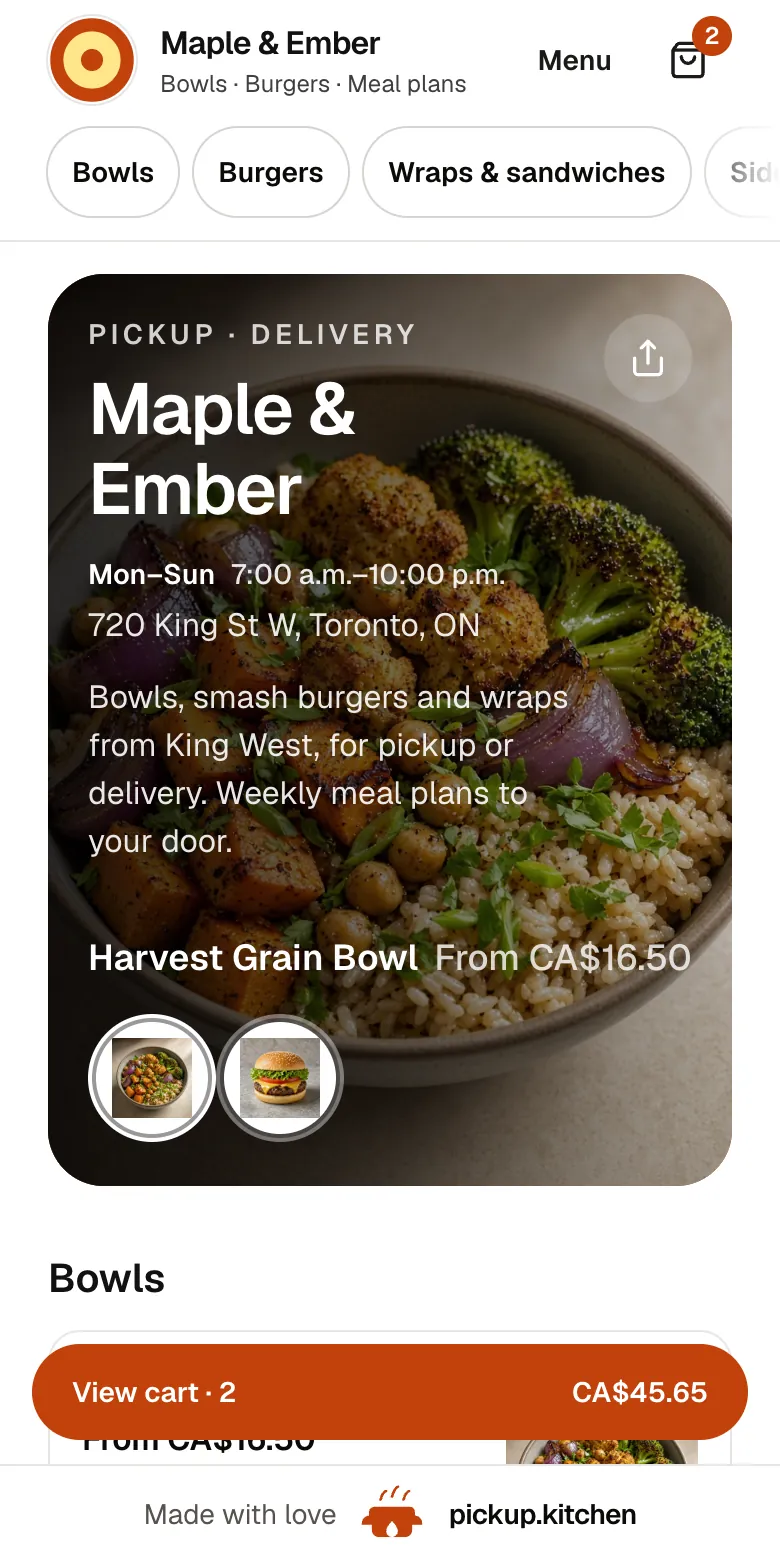
1Your guests
Your menu, on your own site
yourname.pickup.kitchen shows your dishes with photos and prices, and each guest picks pickup or delivery.
See how it works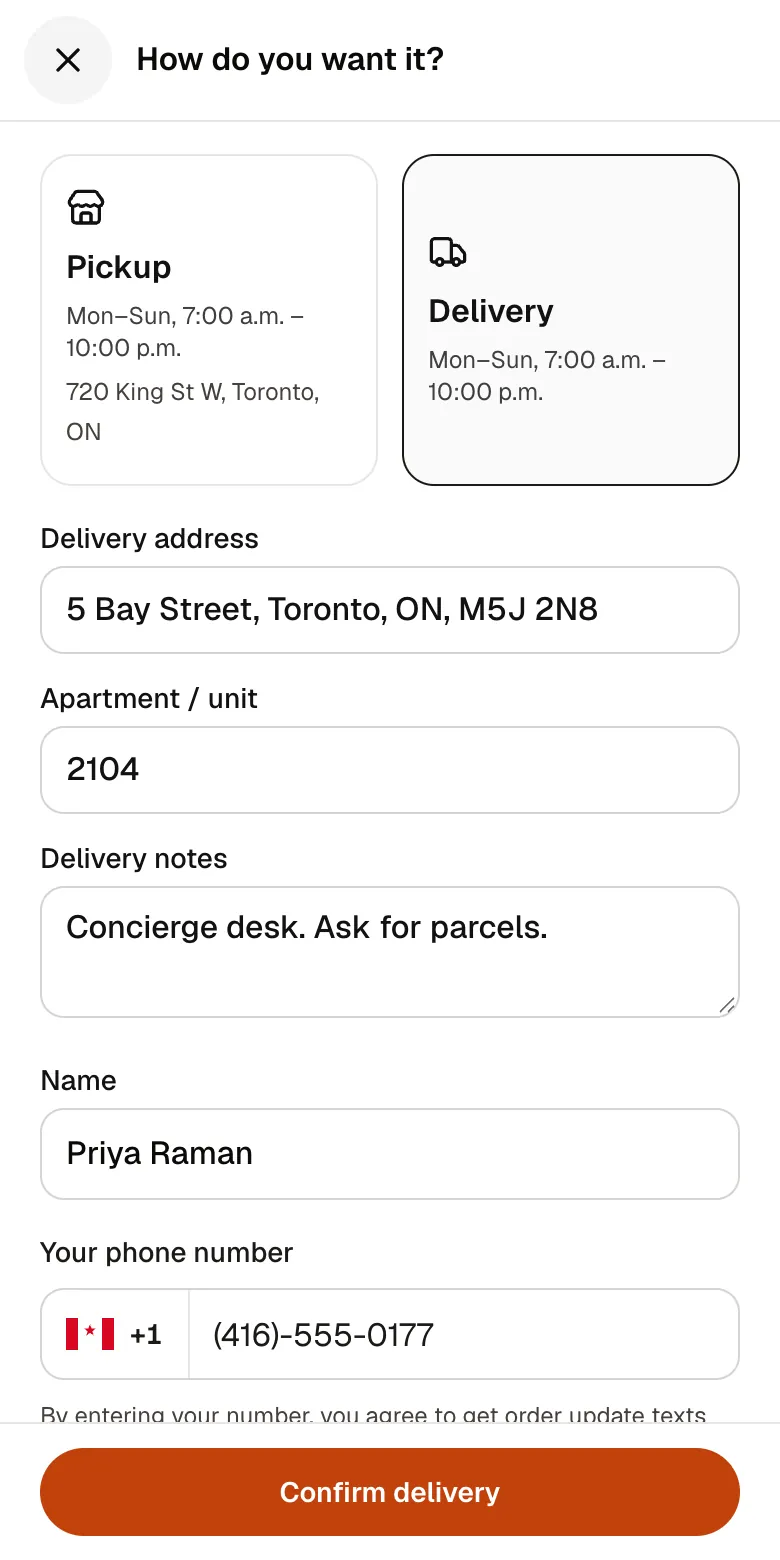
2Your guests
A checkout that takes seconds
A pickup time or a delivery address, then pay by card. No app to install and no account before paying.
See how it works
FAQ
Questions
Do I need a license to sell baked goods from home in Arizona?
You need to register with ADHS under the Cottage Food Program and complete an accredited food handler course. ADHS issues a Cottage Food Certificate by email. Its registration guide lists no fee.
Is there a sales limit for Arizona cottage food?
The cottage food statute, A.R.S. sections 36-931 to 36-933, sets no dollar sales cap.
Can I sell cottage food online in Arizona?
Yes. If you offer cottage food online, you must show your name and registration number, ingredients, production date, the required statement and the ADHS website address in a prominent notification. Dairy, meat and poultry items cannot go through third-party delivery platforms.
Can I use a delivery app for cottage food in Arizona?
For foods without dairy, meat or poultry, the statute lets a third-party vendor or carrier deliver. For dairy, meat or poultry foods, you must sell them and deliver in person, and third-party food delivery platforms are excluded.
What can't I sell as an Arizona cottage food business?
Alcohol, unpasteurized milk, fish and shellfish, marijuana products, and meat or poultry unless federal law allows the sale. Pet treats need the Arizona Department of Agriculture.
Do I need a food handler card for an Arizona cottage food business?
Yes. The statute requires a food handler course from an accredited program with active certification, and ADHS asks you to upload the certificate when you register.
Keep reading
- GuideCottage food laws by state: caps, permits, online salesCottage food laws explained: what they are, the rules most states share, how to start selling from home, and a 15-state table of caps and permits.
- By businessSell food from home: your own ordering pageSell food from home with a weekly menu, an order cutoff and pickup windows on your own link. Cottage food rules explained. Free onboarding, 10% per order.
- GuideHow to start a bakery business from homeHow to start a bakery business from home: check your cottage food rules, pick bakes that qualify, label and price them, take pre-orders. Steps and sources.
- ProductOnline ordering system for restaurantsAn online ordering system for restaurants: your own site at yourname.pickup.kitchen, time slots that close when full, and a kitchen screen. 10% per order.
- By businessBakery POS with online pre-ordersBakery POS that takes counter sales and online pre-orders on one menu, with pickup windows, an order cutoff and a stock count for each item. 10% per order.
Free onboarding. Pay as you use.
Take orders from your home kitchen
Set pickup windows and delivery, publish your label details, and take your first orders on your own site.