Cottage food law · Florida
Florida cottage food law: sell from your home kitchen
The Florida cottage food law lets you sell low-risk foods from your home without a state food permit, as long as your annual gross sales stay at or under $250,000. You can sell in person, online and by mail order. You cannot sell wholesale.
Free onboarding. Pay as you use. No monthly fee for ordering.
The short version
- No food permit from FDACS if sales stay at or under $250,000 a year
- Online, mail order and in-person sales are allowed; wholesale is not
- The label needs one set sentence in at least 10-point type
Florida at a glance
Checked November 2026- The law
- Cottage food operation (Florida Statutes s. 500.80)
- Sales cap
- $250,000 annual gross sales, counting all locations
- Registration or permit
- None. Exempt from the FDACS food permit if you follow s. 500.80 and gross sales stay at or under $250,000.
- Fee
- None listed by FDACS.
- Selling online
- Allowed: over the Internet or by mail order (s. 500.80(2)).
- Delivery
- In person directly to the consumer, to a specific event venue, or by USPS or commercial mail delivery service.
- Shipping
- Allowed by United States Postal Service or commercial mail delivery service.
- Training
- No training requirement in s. 500.80.
- Label statement
- Made in a cottage food operation that is not subject to Florida's food safety regulations. (at least 10-point type, contrasting color)
- In effect
- Cap set at $250,000 by chapter 2021-211; latest amendment in the statute history is chapter 2025-22 (effective date not shown on the page).
Checked against the official source in November 2026. This is a plain-English summary, not legal advice. Rules change, so confirm with your state or county before you sell.
What you can sell
Florida defines a cottage food product as food that is not time or temperature controlled for safety. It also cannot be a potentially hazardous food as defined by Department of Agriculture and Consumer Services (FDACS) rule. FDACS says these are foods "that present a low risk of foodborne illness."
The FDACS cottage food page lists these categories:
- Loaf breads, rolls and biscuits
- Cakes, pastries and cookies
- Candies and confections
- Honey
- Jams, jellies and preserves
- Fruit pies and dried fruits
- Dry herbs, seasonings and mixtures
- Homemade pasta
- Cereals, trail mixes and granola
- Coated or uncoated nuts
- Vinegar and flavored vinegars
- Popcorn and popcorn balls
What you can't sell
Anything that needs time or temperature control to stay safe is not a cottage food product. Under the statute you also may not sell, offer for sale or deliver cottage food at wholesale. That means no selling to restaurants, cafes or shops for resale.
You may only sell cottage food products that you store at your home. Free samples are allowed, but FDACS says they must be prepackaged.
Registration and costs
Section 500.80 of the Florida Statutes exempts a cottage food operation from the FDACS permit. You qualify if you follow the section and your annual gross sales of cottage food stay at or under $250,000. FDACS lists no registration and no fee.
All sales at all locations count toward the $250,000, whatever the product or the number of people involved. If FDACS asks, you must give written documentation of your annual gross sales.
The statute sets no training requirement. FDACS can investigate a complaint and, only after receiving one, can enter and inspect your premises. Refusing entry is grounds for disciplinary action.
You still owe taxes. The statute says the exemption does not cover any state or federal tax law, rule or certificate that applies to cottage food operations.
Where and how you can sell
The statute says you "may sell, offer for sale, and accept payment for cottage food products over the Internet or by mail order." Products may be delivered in person directly to the consumer, to a specific event venue, or by the United States Postal Service or a commercial mail delivery service. FDACS also says you can sell on your own website, by mail order and in person.
The statute names those three delivery routes. It does not mention courier apps. If you plan to use a third-party delivery app, ask FDACS first.
Florida preempts local rules. A local law may not prohibit a cottage food operation or regulate how you prepare, process, store or sell products. You must still follow the home-based business conditions in section 559.955.
Labels
Cottage food must be prepackaged with a label on it. The statement must be printed in at least 10-point type in a color that contrasts with the label background: "Made in a cottage food operation that is not subject to Florida's food safety regulations."
- The name and address of your cottage food operation
- The name of the product
- Ingredients, in descending order of predominance by weight
- Net weight or net volume
- Allergen information as federal labeling rules require
- Nutrition information, only if you make a nutritional claim
Getting started checklist
- Check that every product is a low-risk, non-TCS food from the FDACS categories.
- Design a prepackaged label with all six items and the 10-point statement.
- Read section 559.955 for the home-based business conditions.
- Set up a simple sales log. FDACS can ask for written proof of sales.
- Make sure your sales tax registration, if you need one, is in order.
- Plan delivery: in person, event venue, USPS or a commercial mail service.
- Decide how you will stay under $250,000 across every sales channel.
How pickup.kitchen fits the Florida rules
Florida is one of the friendliest states for online ordering, and pickup.kitchen is built for it. You get your own site at yourname.pickup.kitchen, take card payments through your own Stripe account, and see every order on a kitchen screen.
Pickup windows and delivery days let you run a weekly drop. Time slots close when full and you can mark a day sold out. If you deliver yourself, the delivery tools plan the route and send it to the driver's phone, with a photo at the door.
Every paid order is saved with the customer, so you have a record of your sales when you need to show FDACS written documentation. Your customer list also lets you email past buyers when the next batch opens. Free onboarding, pay as you use.
What we checked, and when
Checked November 2026 against the official Florida sources linked below. Laws change, so open the official page before you print labels or take your first order.
This is a plain-language summary, not legal advice. Check with your state and county before you sell.
Real screens
Take orders from your home kitchen
1Your guests
Your menu, on your own site
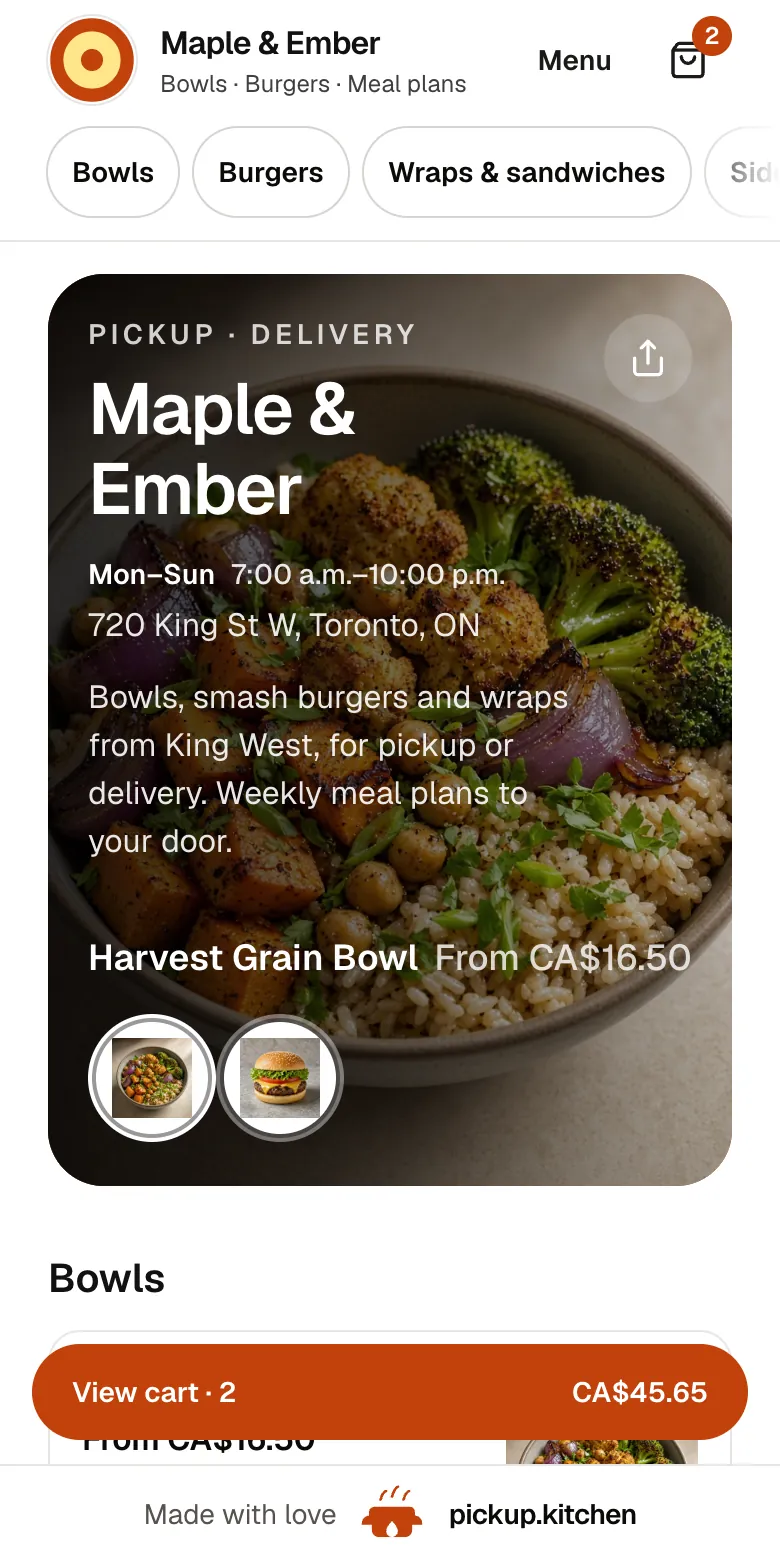
yourname.pickup.kitchen shows your dishes with photos and prices, and each guest picks pickup or delivery.
See how it works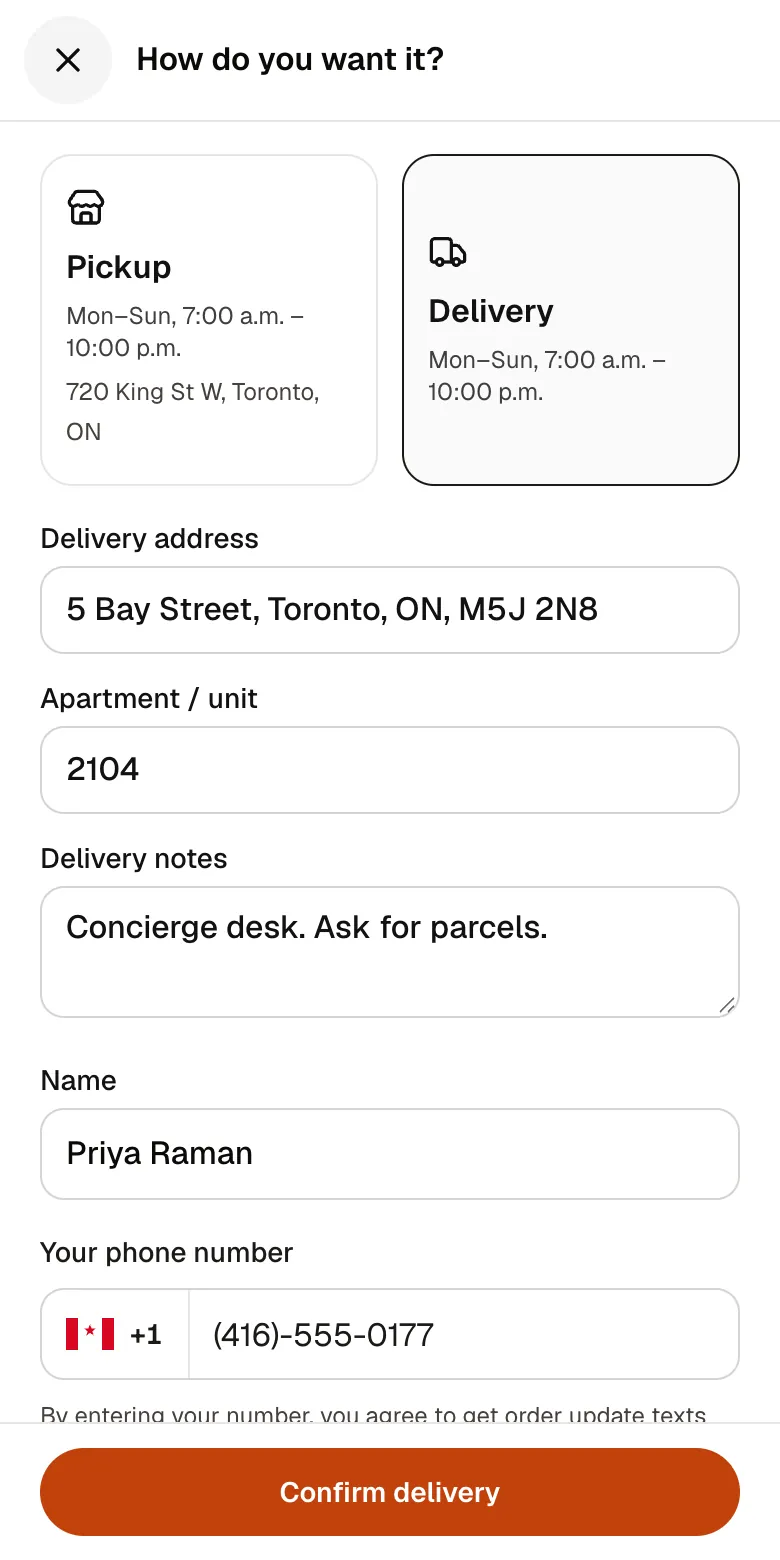
2Your guests
A checkout that takes seconds
A pickup time or a delivery address, then pay by card. No app to install and no account before paying.
See how it works
FAQ
Questions
Do I need a license to sell baked goods from home in Florida?
No FDACS food permit is needed if you follow section 500.80 and your annual gross sales of cottage food stay at or under $250,000. You still need a prepackaged, correctly labeled product and must meet home-based business conditions.
How much can you make selling food from home in Florida?
Up to $250,000 a year in gross sales of cottage food products, counting every location and sales channel. The cap was raised to $250,000 by chapter 2021-211.
Can I sell cottage food online or ship it in Florida?
Yes. The statute allows sales over the Internet or by mail order, with delivery in person, to an event venue, or by USPS or a commercial mail delivery service.
Can I sell cottage food to restaurants or stores in Florida?
No. The statute says a cottage food operation may not sell, offer for sale or deliver cottage food products at wholesale.
What does a Florida cottage food label need to say?
Your name and address, the product name, ingredients by weight, net weight or volume, allergens, and the sentence "Made in a cottage food operation that is not subject to Florida's food safety regulations" in at least 10-point type in a contrasting color.
Keep reading
- GuideCottage food laws by state: caps, permits, online salesCottage food laws explained: what they are, the rules most states share, how to start selling from home, and a 15-state table of caps and permits.
- By businessSell food from home: your own ordering pageSell food from home with a weekly menu, an order cutoff and pickup windows on your own link. Cottage food rules explained. Free onboarding, 10% per order.
- GuideHow to start a bakery business from homeHow to start a bakery business from home: check your cottage food rules, pick bakes that qualify, label and price them, take pre-orders. Steps and sources.
- ProductOnline ordering system for restaurantsAn online ordering system for restaurants: your own site at yourname.pickup.kitchen, time slots that close when full, and a kitchen screen. 10% per order.
- By businessBakery POS with online pre-ordersBakery POS that takes counter sales and online pre-orders on one menu, with pickup windows, an order cutoff and a stock count for each item. 10% per order.
Free onboarding. Pay as you use.
Take orders from your home kitchen
Set pickup windows and delivery, publish your label details, and take your first orders on your own site.