Cottage food law · New York
New York cottage food law: the home processor exemption
The New York cottage food law is called the Home Processor Exemption. It lets you make approved non-refrigerated foods at home and sell them online, at markets and to local shops, with no Article 20-C license. You must register with the state first. Registration has no fee and no expiry date, and the Department asks you to allow up to 16 weeks.
Free onboarding. Pay as you use. No monthly fee for ordering.
The short version
- Register with NY Agriculture and Markets; the Department lists no fee
- Online sales and home delivery are allowed inside New York only
- Anything that needs refrigeration is not allowed
New York at a glance
Checked November 2026- The law
- Home Processor Exemption (1 CRR-NY 276.4; exempt from Article 20-C licensing)
- Sales cap
- None stated on the Department's Home Processor page.
- Registration or permit
- Required: submit a Home Processor Registration Request to NY Agriculture and Markets. Registration is location-specific and has no expiration date.
- Fee
- No fee currently, per the Department's page. Allow up to 16 weeks for processing.
- Selling online
- Allowed: internet sales within New York State.
- Delivery
- Home delivery allowed within New York State.
- Shipping
- Shipping products out of state is not permitted.
- Label statement
- A phrase such as "Made in a Home Kitchen" (type 1/16 inch or larger), plus common name, ingredients, net quantity, your name and full address.
- In effect
- No dated change listed on the page. Online sales were opened by a Department announcement on April 30, 2018.
Checked against the official source in November 2026. This is a plain-English summary, not legal advice. Rules change, so confirm with your state or county before you sell.
What you can sell
The New York State Department of Agriculture and Markets only allows non-potentially hazardous foods that do not need refrigeration. It publishes a list of allowed items. Some carry conditions, so read the page before you register.
- Breads, rolls, cinnamon rolls, biscuits, bagels, muffins and scones (without vegetables)
- Doughnuts without cream fillings, cookies, baklava, biscotti, cakes, cake pops, cupcakes and brownies
- Double-crust fruit pies only
- Fruit jams, jellies and marmalades made with high-acid fruits
- Fudge, popcorn and caramel corn, peanut brittle, Rice Krispies treats, granola, trail mix and granola bars
- Waffle cones, pizzelle, toffee, caramel apples, sugar confections, vegetable chips, crackers and pretzels
- Repacked or blended commercially dried spices, herbs, soup mixes, dried fruit and baking mixes
What you can't sell
The Department says any product that requires refrigeration is prohibited. It names these examples. Pet food and treats need a separate registration.
- Buttercream or cream cheese frosting made with dairy or eggs
- Cheesecake, cream pies, quiche and no-bake products
- Pickles, sauces, salsas, vinegars, oils, dressings, compotes, spreads and nut butters
- Cheese, yogurt, dairy, meat, fish and poultry
- Beverages, coffee roasting, alcohol products and freeze-dried foods
- Raw nuts and tempered chocolate for dipping
Registration and costs
You are exempt from the Article 20-C processing license, but you must submit a Home Processor Registration Request to the Department's Food Safety and Inspection division. The page says there is currently no fee. Registration has no expiration date and is tied to your location, so you must reapply if you move. To add products, send a supplemental registration.
The Department warns of high volume and asks you to allow up to 16 weeks, handled in the order received. If you use a private well, include a water test from a certified lab.
The Department reviews home kitchens on a complaint basis only. Commercial equipment is not allowed. The page lists no training requirement and sets no dollar sales cap. You cannot use the exemption to supply a store or restaurant of your own if you hold a Department of Health permit or an Agriculture and Markets license.
Where and how you can sell
The Department's page lists farms, farm stands, farmers' markets, green markets, craft fairs and flea markets. It also lists home delivery and internet sales within New York State, and wholesale to local restaurants, cafes and grocery stores within New York State.
Shipping out of state is not permitted. Items must be packaged at home, not at an event. Your website and social media may not advertise prohibited foods, so keep your menu to allowed items.
The Department announced in April 2018 that home processors could sell online within New York. The current page keeps that rule.
Labels
Add a phrase such as "Made in a Home Kitchen" (another example the Department gives is "Made at Home by XYZ"), in type 1/16 inch or larger.
- The common name of the product
- Ingredients in order of predominance by weight
- Net quantity
- Your name and full address
- Allergens (eggs, milk, fish, shellfish, soybeans, peanuts, tree nuts, wheat, sesame) clearly identified in the ingredient statement
Getting started checklist
- Check every product against the allowed and prohibited lists on the Department's page.
- Test your well water first if you have a private well.
- Submit the Home Processor Registration Request and expect up to 16 weeks.
- Print labels with the "Made in a Home Kitchen" phrase and your full address.
- Ask your town about zoning for a home-based business.
- Contact the Department of Taxation and Finance about sales tax.
- Do not sell outside New York or advertise prohibited foods.
How pickup.kitchen fits the New York rules
New York names internet sales and home delivery inside the state, so your own ordering site fits. Set up yourname.pickup.kitchen while your registration is being processed, so you are ready the week it arrives. Payments go to your own Stripe account.
Pickup windows suit door pickup and market days. Slots close when full, and you can set order cutoffs for a weekly bake. The delivery tools plan your route, send it to your phone, and take a photo at the door.
Your customer list keeps every buyer for the next drop, and you can email them. Keep your menu to the Department's allowed foods. Free onboarding, pay as you use.
What we checked, and when
Checked November 2026 against the official New York sources linked below. Laws change, so open the official page before you print labels or take your first order.
This is a plain-language summary, not legal advice. Check with your state and county before you sell.
Real screens
Take orders from your home kitchen
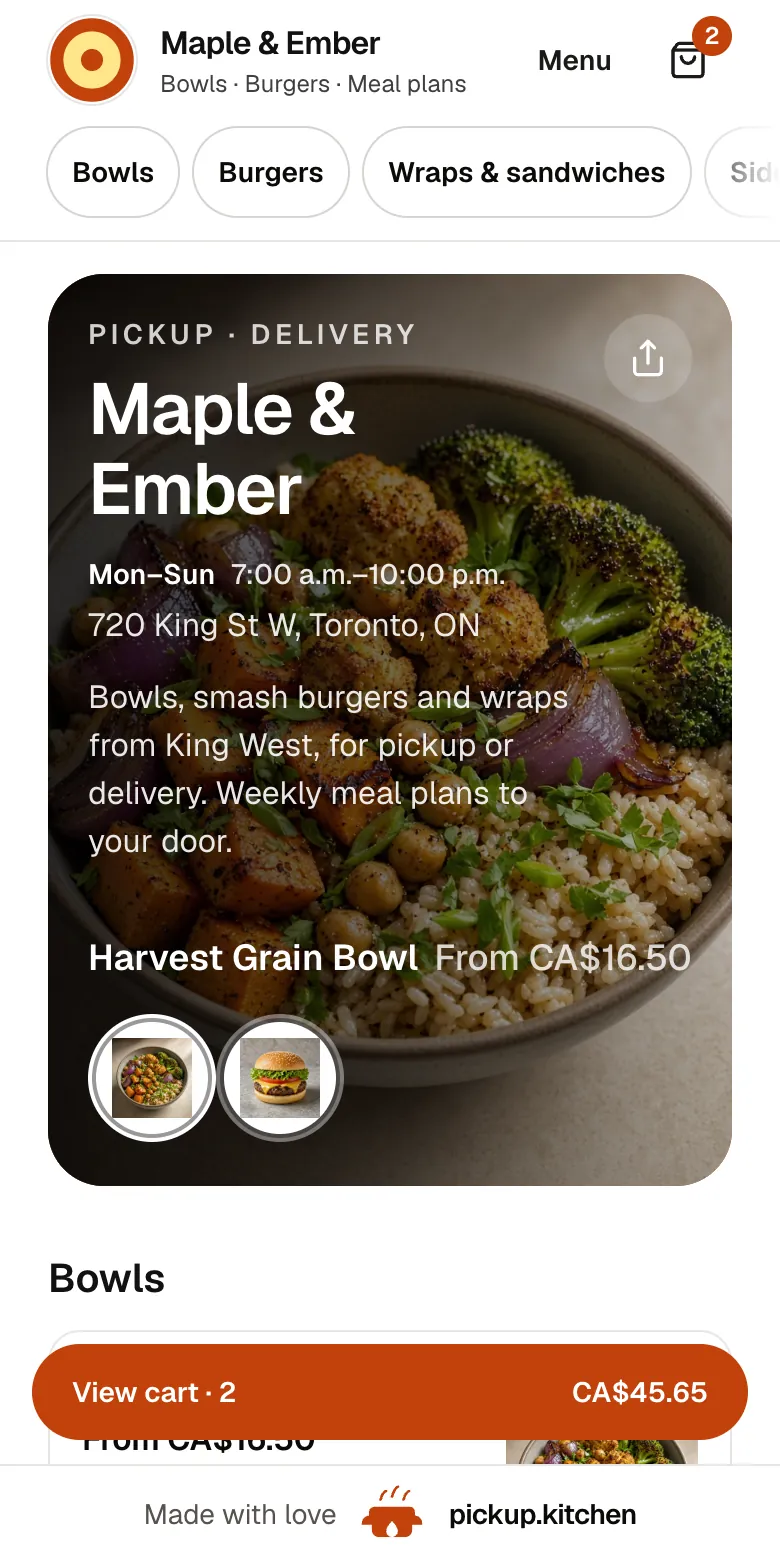
1Your guests
Your menu, on your own site
yourname.pickup.kitchen shows your dishes with photos and prices, and each guest picks pickup or delivery.
See how it works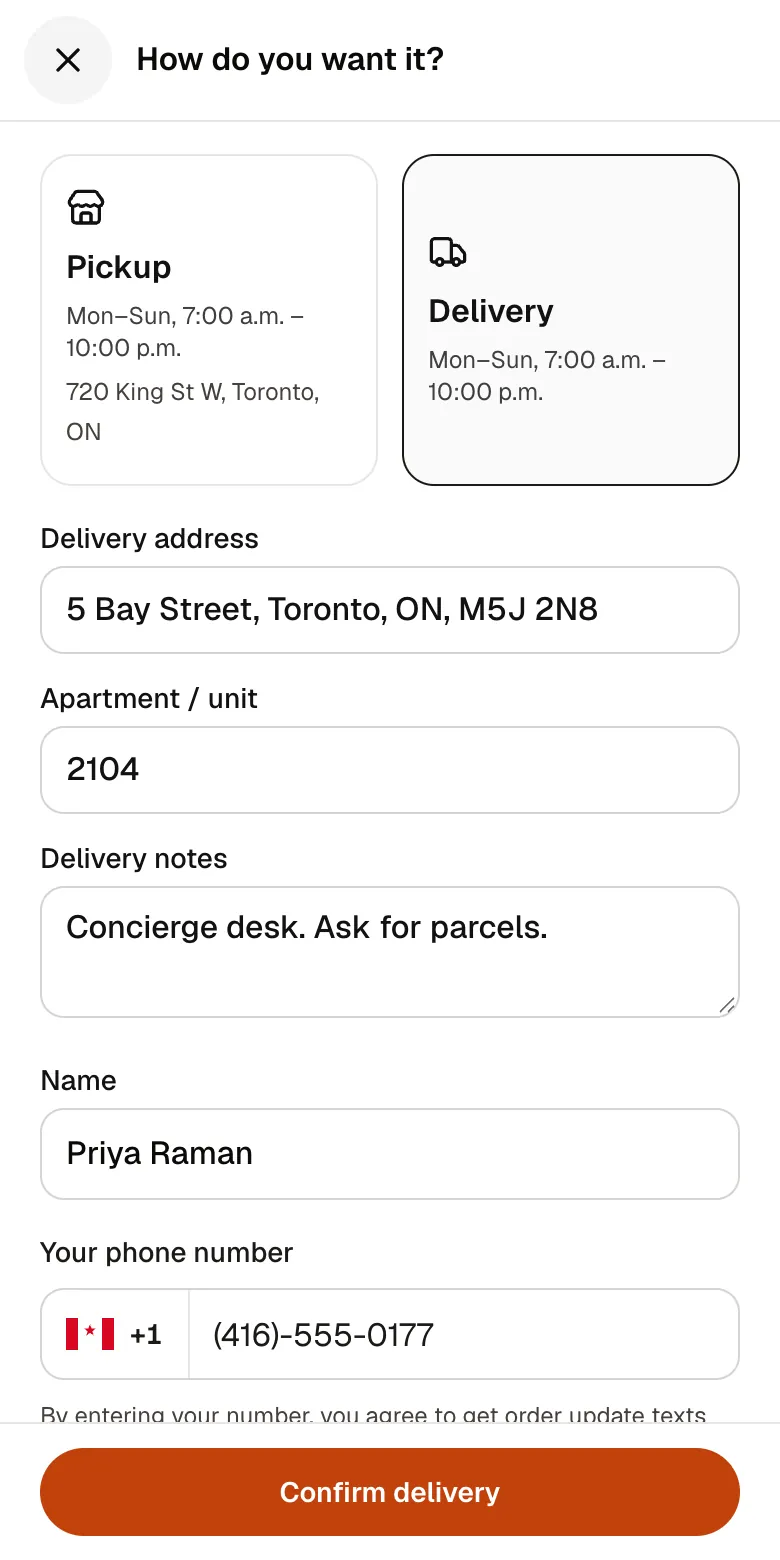
2Your guests
A checkout that takes seconds
A pickup time or a delivery address, then pay by card. No app to install and no account before paying.
See how it works
FAQ
Questions
Do I need a license to sell baked goods from home in New York?
You are exempt from the Article 20-C license under the Home Processor Exemption, but you must register with Agriculture and Markets. The Department says there is currently no fee, and to allow up to 16 weeks.
Can I sell cottage food online in New York?
Yes, within New York State. The Department's page lists home delivery and internet sales inside the state. Shipping out of state is not permitted.
Can I sell cottage food to stores and restaurants in New York?
The Department's page lists wholesale to local restaurants, cafes and grocery stores within New York State, as well as farm stands, farmers' markets and craft fairs.
What foods can't I sell under the New York home processor exemption?
Anything that needs refrigeration, including cheesecake, cream pies, dairy-based frostings, pickles, sauces, salsas, nut butters, cheese, meat, fish and poultry.
Is there a sales limit for New York home processors?
The Department's Home Processor page sets no dollar sales cap. Check with the Department if your sales grow.
What does a New York home processor label need?
The common name, ingredients, net quantity, your name and full address, allergens in the ingredient statement, and a phrase such as "Made in a Home Kitchen" in type at least 1/16 inch.
Keep reading
- GuideCottage food laws by state: caps, permits, online salesCottage food laws explained: what they are, the rules most states share, how to start selling from home, and a 15-state table of caps and permits.
- By businessSell food from home: your own ordering pageSell food from home with a weekly menu, an order cutoff and pickup windows on your own link. Cottage food rules explained. Free onboarding, 10% per order.
- GuideHow to start a bakery business from homeHow to start a bakery business from home: check your cottage food rules, pick bakes that qualify, label and price them, take pre-orders. Steps and sources.
- ProductOnline ordering system for restaurantsAn online ordering system for restaurants: your own site at yourname.pickup.kitchen, time slots that close when full, and a kitchen screen. 10% per order.
- By businessBakery POS with online pre-ordersBakery POS that takes counter sales and online pre-orders on one menu, with pickup windows, an order cutoff and a stock count for each item. 10% per order.
Sources
Free onboarding. Pay as you use.
Take orders from your home kitchen
Set pickup windows and delivery, publish your label details, and take your first orders on your own site.