Cottage food law · New Jersey
New Jersey cottage food law: permit, cap and selling rules
The New Jersey cottage food law requires a Cottage Food Operator permit from the state Department of Health before you sell. The permit costs a $100 application fee, lasts two years and limits you to $50,000 in gross annual sales. You can take orders and payments online, but you must hand the food to the customer in person.
Free onboarding. Pay as you use. No monthly fee for ordering.
The short version
- Permit required: $100 application fee, valid 2 years
- $50,000 gross annual sales limit; New Jersey residents only
- Online orders are fine, but no shipping: hand over in person
New Jersey at a glance
Checked November 2026- The law
- Cottage Food Operator permit (N.J.A.C. 8:24-11)
- Sales cap
- $50,000 gross annual sales
- Registration or permit
- Required: Cottage Food Operator permit from NJDOH; valid 2 years; New Jersey residents only; about 16 weeks to review.
- Fee
- $100 application fee (non-refundable); a new application and fee to add products.
- Selling online
- You may advertise, take orders and process payments online, but may not ship; hand products to the customer in person.
- Delivery
- Sale at a consumer's home in New Jersey is allowed; products must be handed to the customer in person.
- Shipping
- Not allowed through common carriers such as USPS, FedEx or DHL.
- Training
- Food Protection Manager Certification (not Food Handler).
- Label statement
- A statement that the food is prepared pursuant to N.J.A.C. 8:24-11 and that the home kitchen has not been inspected by the Department of Health (copy exact wording from NJDOH), with your full name, permit number, and town and NJ.
- In effect
- No effective date shown on the FAQ; it notes permit numbers are now seven digits and that review takes 16 weeks.
Checked against the official source in November 2026. This is a plain-English summary, not legal advice. Rules change, so confirm with your state or county before you sell.
What you can sell
The New Jersey Department of Health (NJDOH) defines cottage food products as non-TCS foods: foods that do not need time or temperature control for safety. NJDOH's examples include baked goods, candy, dried fruit, dry baking mixes, jams and preserves, granola, nut butters, popcorn, roasted coffee and dried tea.
Other non-TCS foods may be approved if you apply in writing. Raw, unprocessed honey is not a cottage food and needs no permit.
What you can't sell
- TCS foods, which need time or temperature control for safety
- Pet food and dog treats, which NJDOH says cannot be made or sold under the cottage food rule
- Anything sold to a retail store or wholesale food establishment
- Decorating classes or other instructional events under the permit
Permit, training and costs
Only New Jersey residents can apply. The application fee is $100, paid online, and it is non-refundable. NJDOH asks for form CFO-1, a Product Questionnaire for each product, filling and frosting, proof of water potability, and a Food Protection Manager Certificate. Review takes about 16 weeks with no expedited service.
The permit is valid for two years and cannot be transferred. If you move, you need a new permit and new labels. Adding products takes a new full application and another $100. Send renewals at least 45 days before your permit expires so it stays active during review.
NJDOH requires Food Protection Manager Certification, not a food handler card. It does not run the training itself.
NJDOH does not inspect home kitchens, but it may investigate if it learns you are preparing TCS food at home or during a foodborne illness outbreak. Contact your local zoning office first. NJDOH will not approve an application if local zoning prohibits a cottage food business in your home.
Sales cap
The cap is $50,000 in gross annual sales, counted before taxes and operating expenses. NJDOH's FAQ says permit holders are limited to $50,000.
Where and how you can sell
NJDOH lists these places: your home, a consumer's home in New Jersey, a New Jersey farmers' market or farm stand, and a temporary retail food event. For events you need a temporary food permit from your local health department, and you may not prepare food on site.
You can advertise, take orders and process payments online. But NJDOH says you "are not allowed to send products through common carriers like USPS, FedEx or DHL" and products must be handed to the customer in person. Selling to stores or wholesale requires a commercial kitchen and a Wholesale Food-Cosmetic License.
Labels
Every packaged product needs a label. Use your full name, not just your business name. NJDOH's required statement says the food is prepared under N.J.A.C. 8:24-11 and that the home kitchen has not been inspected by the Department of Health. Copy the exact wording from NJDOH's page or your permit packet.
- The common name of the product
- Ingredients in descending order by weight
- A "Contains" allergen statement
- Your full name and business name, your permit number, and your town and "NJ"
- At a farmers' market, at least one tag per item and a display sign with your permit information
Getting started checklist
- Confirm you live in New Jersey and your zoning allows a home food business.
- Get a Food Protection Manager Certificate, not a food handler card.
- Test your water and keep the potability proof.
- File form CFO-1, a product questionnaire for each product, and the $100 fee.
- Plan for about 16 weeks of review.
- Print labels with your permit number and the required statement.
- Keep each year's sales under $50,000.
How pickup.kitchen fits the New Jersey rules
New Jersey allows online orders and payments but wants a person-to-person handoff. pickup.kitchen gives you yourname.pickup.kitchen with a menu and checkout, payments to your own Stripe account, and pickup windows where you hand over each order.
Delivery to a consumer's home in New Jersey is a listed place of sale. If you deliver yourself, the delivery tools plan the route and send it to your phone, with a photo at the door. Do not use USPS, FedEx or DHL.
Slots close when full, and order cutoffs keep a weekly drop within what you can bake. Your customer list holds every buyer. Free onboarding, pay as you use.
What we checked, and when
Checked November 2026 against the official New Jersey sources linked below. Laws change, so open the official page before you print labels or take your first order.
This is a plain-language summary, not legal advice. Check with your state and county before you sell.
Real screens
Take orders from your home kitchen
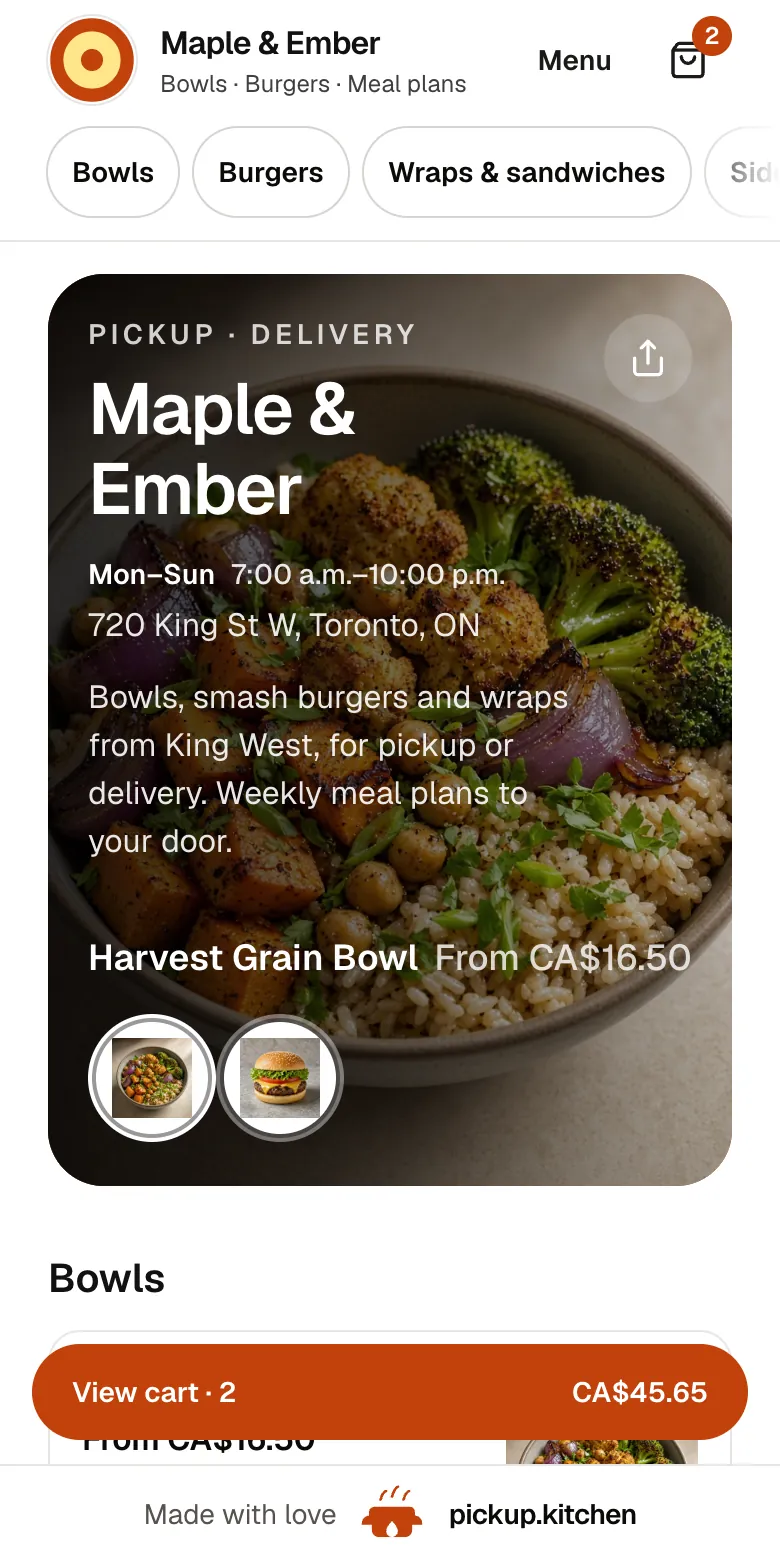
1Your guests
Your menu, on your own site
yourname.pickup.kitchen shows your dishes with photos and prices, and each guest picks pickup or delivery.
See how it works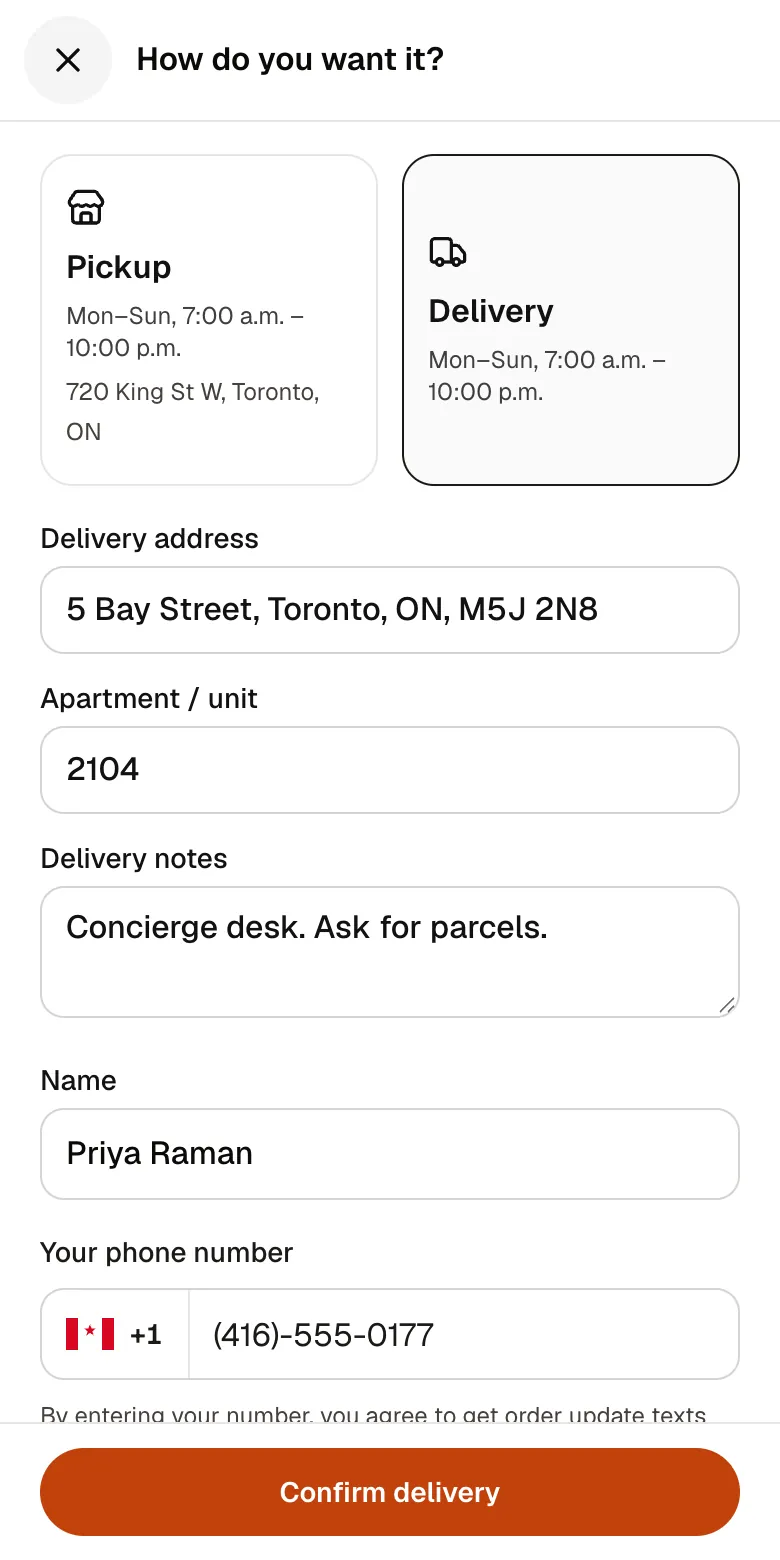
2Your guests
A checkout that takes seconds
A pickup time or a delivery address, then pay by card. No app to install and no account before paying.
See how it works
FAQ
Questions
Do I need a license to sell baked goods from home in New Jersey?
Yes. You need a Cottage Food Operator permit from NJDOH. It costs a $100 application fee, is valid for two years, and requires a Food Protection Manager Certificate.
How much can you make selling food from home in New Jersey?
NJDOH limits permit holders to $50,000 in gross annual sales, counted before taxes and operating expenses.
Can I sell cottage food online in New Jersey?
You can advertise, take orders and process payments online. You may not ship, so the customer has to receive the product from you in person.
Can I ship cottage food in New Jersey?
No. NJDOH says you may not send products through common carriers like USPS, FedEx or DHL.
Can I sell cottage food to stores in New Jersey?
No. A cottage food operator permit does not allow sales to retail stores or wholesale establishments. That needs a commercial kitchen and a Wholesale Food-Cosmetic License.
Do I need a food handler card for a New Jersey cottage food business?
A food handler card is not enough. NJDOH requires Food Protection Manager Certification from an accredited program.
Keep reading
- GuideCottage food laws by state: caps, permits, online salesCottage food laws explained: what they are, the rules most states share, how to start selling from home, and a 15-state table of caps and permits.
- By businessSell food from home: your own ordering pageSell food from home with a weekly menu, an order cutoff and pickup windows on your own link. Cottage food rules explained. Free onboarding, 10% per order.
- GuideHow to start a bakery business from homeHow to start a bakery business from home: check your cottage food rules, pick bakes that qualify, label and price them, take pre-orders. Steps and sources.
- ProductOnline ordering system for restaurantsAn online ordering system for restaurants: your own site at yourname.pickup.kitchen, time slots that close when full, and a kitchen screen. 10% per order.
- By businessBakery POS with online pre-ordersBakery POS that takes counter sales and online pre-orders on one menu, with pickup windows, an order cutoff and a stock count for each item. 10% per order.
Free onboarding. Pay as you use.
Take orders from your home kitchen
Set pickup windows and delivery, publish your label details, and take your first orders on your own site.