Cottage food law · Michigan
Michigan cottage food law: what you can sell from home
The Michigan cottage food law lets you sell shelf-stable foods made in your home kitchen without a license, registration or inspection. Since March 24, 2026 the statute sets the yearly sales limit at $50,000, or $75,000 if you sell items priced at $250 or more each. You can sell by internet, mail order or a delivery platform, to customers in Michigan.
Free onboarding. Pay as you use. No monthly fee for ordering.
The short version
- No license, registration or inspection; MSU Product Center registration is optional
- $50,000 a year in sales, or $75,000 for items priced $250+ each
- Online and delivery-app sales allowed in Michigan if the buyer can talk to you first
Michigan at a glance
Checked November 2026- The law
- Michigan Cottage Food Law (MCL 289.4102)
- Sales cap
- $50,000 a year ($75,000 if priced at $250 or more per unit); MDARD may adjust for inflation each October 1 starting 2026
- Registration or permit
- None required. Optional registration with the MSU Product Center.
- Fee
- Optional MSU Product Center registration: one-time fee of up to $50.
- Selling online
- Allowed by internet or mail order if you give the consumer an opportunity to directly interact with you (face to face or virtual meeting) before the sale; Michigan consumers only.
- Delivery
- Allowed through a third-party food delivery platform under the same interaction condition; Michigan consumers only.
- Shipping
- Mail order allowed to consumers in Michigan only.
- Label statement
- Made in a home kitchen that has not been inspected by the Michigan department of agriculture and rural development.
- In effect
- 2025 Act 51, effective March 24, 2026.
Checked against the official source in November 2026. This is a plain-English summary, not legal advice. Rules change, so confirm with your state or county before you sell.
What you can sell
Michigan's exemption covers cottage food products: non-potentially hazardous foods that do not need time or temperature control to stay safe. The Michigan Department of Agriculture and Rural Development (MDARD) gives shelf-stable baked goods as the core category. Its March 2026 one-pager lists breads, quick breads, muffins, cookies and cakes, including cupcakes, birthday cakes and wedding cakes.
Fruit jams and jellies qualify only if they are fruit jams or jellies as defined in 21 CFR part 150, in glass jars. MDARD's what-can-I-make page has the full list.
What you can't sell
MDARD's one-pager excludes foods that need refrigeration or that carry botulism risk.
- Cakes that need refrigeration, such as cheesecake
- Canned fruits or vegetables
- Pickled products such as pickles, corn relish and sauerkraut
- Anything sold at wholesale or on consignment, which the law prohibits
Registration and costs
A cottage food operation is exempt from the licensing and evaluation provisions of Michigan's Food Law. You do not need a license, a registration or an inspection from MDARD. Your food can still be investigated under the law's adulteration and enforcement rules.
Registration is optional. You can register with the MSU Product Center, which may issue a registration number and charge a one-time fee of up to $50. If you register, the number goes on your label in place of your address.
Michigan sets two sales limits in the statute. The standard limit is $50,000 a year. If you sell at a price of $250 or more per unit, the limit is $75,000. The Public Act that set these took effect March 24, 2026. Starting October 1, 2026, and each October 1 after, MDARD may adjust both amounts for inflation using the Detroit Consumer Price Index. Check MDARD's page for the figure in force today.
Gross sales are counted per person at a particular home. MDARD may ask in writing for documents that verify your annual sales.
Where and how you can sell
The default is a direct sale from you to the consumer. Michigan's statute then allows internet and mail order sales, and delivery "through a third-party food delivery platform," on one condition. You must give the consumer an opportunity to directly interact with you before the sale. The interaction can be face to face or a virtual meeting where people can hear or see each other in two-way communication.
Internet, mail order and delivery-platform sales must be to a consumer in Michigan. Older MDARD material says shipping and having someone else deliver are not allowed. The statute as amended is newer, so follow the statute, and check MDARD's current page if the two ever differ.
Wholesale and consignment sales are prohibited. You may store products only in your primary home.
Labels
Cottage food must be prepackaged and labeled before sale. The label has to include this statement: "Made in a home kitchen that has not been inspected by the Michigan department of agriculture and rural development."
- Your business name and address, or your MSU Product Center registration number if you registered
- The product name and ingredients
- Net quantity and allergen information under federal rules
- Nutrition information only if you make a nutritional claim
Getting started checklist
- Check every product is shelf-stable and not a canned or pickled item.
- Decide whether to register with the MSU Product Center (optional).
- Print labels with the exact home-kitchen sentence.
- Set up a way for buyers to talk to you before they pay, such as a call or video chat.
- Keep sales records. MDARD may ask for proof of your annual sales.
- Check your city or township for zoning and home-occupation rules.
- Check MDARD's page each October for any inflation-adjusted limit.
How pickup.kitchen fits the Michigan rules
Michigan is open to online ordering as long as buyers can interact with you first. pickup.kitchen gives you your own site at yourname.pickup.kitchen with a menu, checkout and call and text buttons for questions. Payments go to your own Stripe account.
The statute's test is a face-to-face or two-way virtual meeting. Whether a text thread or a call meets it is MDARD's decision. Ask MDARD, or offer a video call or in-person pickup to first-time buyers and say so on your menu.
Pickup windows, time slots that close when full and delivery days make weekly drops easy. Delivery tools plan routes if you drive orders yourself. Each buyer lands on your customer list for your next email. Keep every order inside Michigan, and watch your yearly total against $50,000. Free onboarding, pay as you use.
What we checked, and when
Checked November 2026 against the official Michigan sources linked below. Laws change, so open the official page before you print labels or take your first order.
This is a plain-language summary, not legal advice. Check with your state and county before you sell.
Real screens
Take orders from your home kitchen
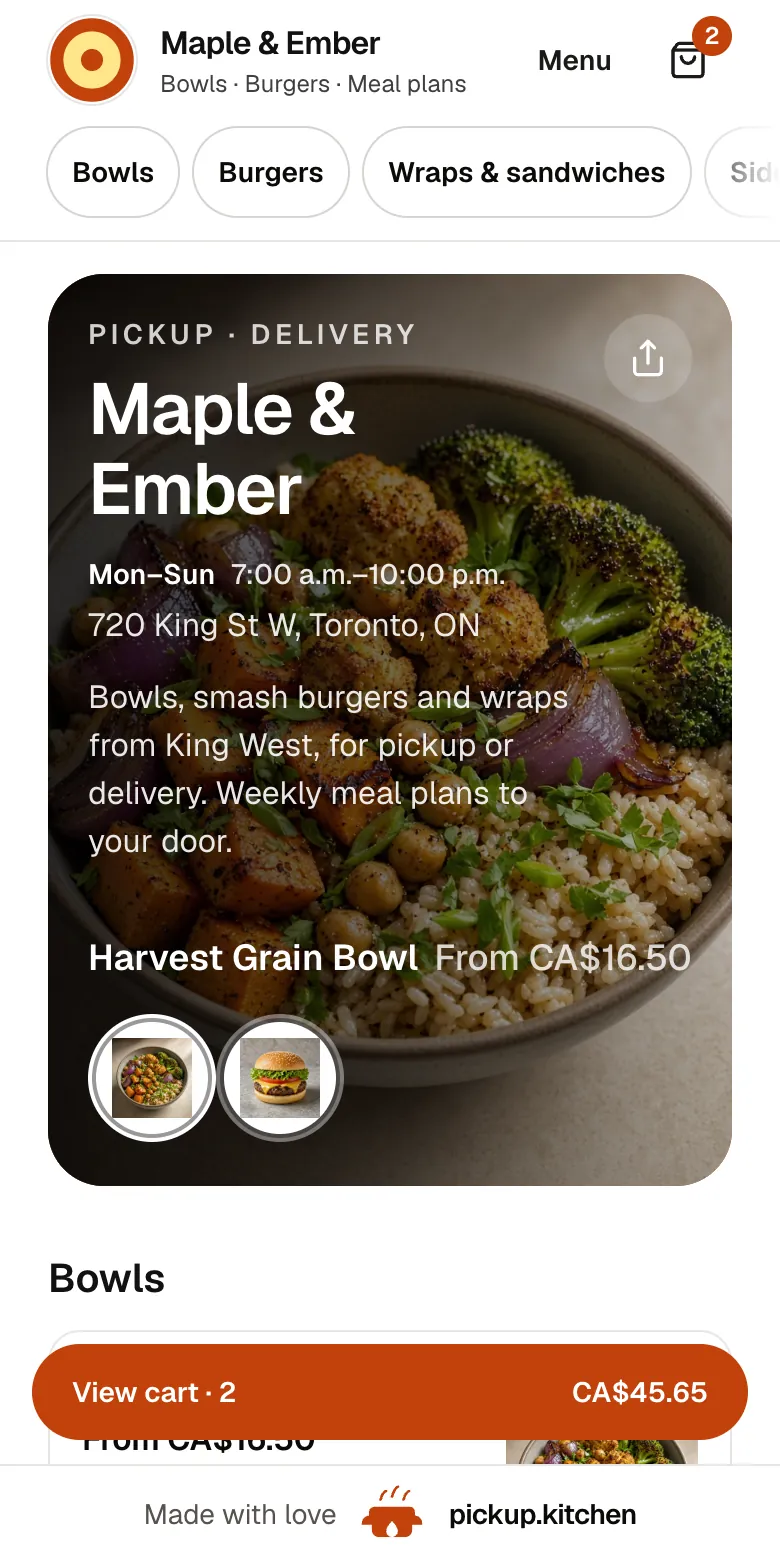
1Your guests
Your menu, on your own site
yourname.pickup.kitchen shows your dishes with photos and prices, and each guest picks pickup or delivery.
See how it works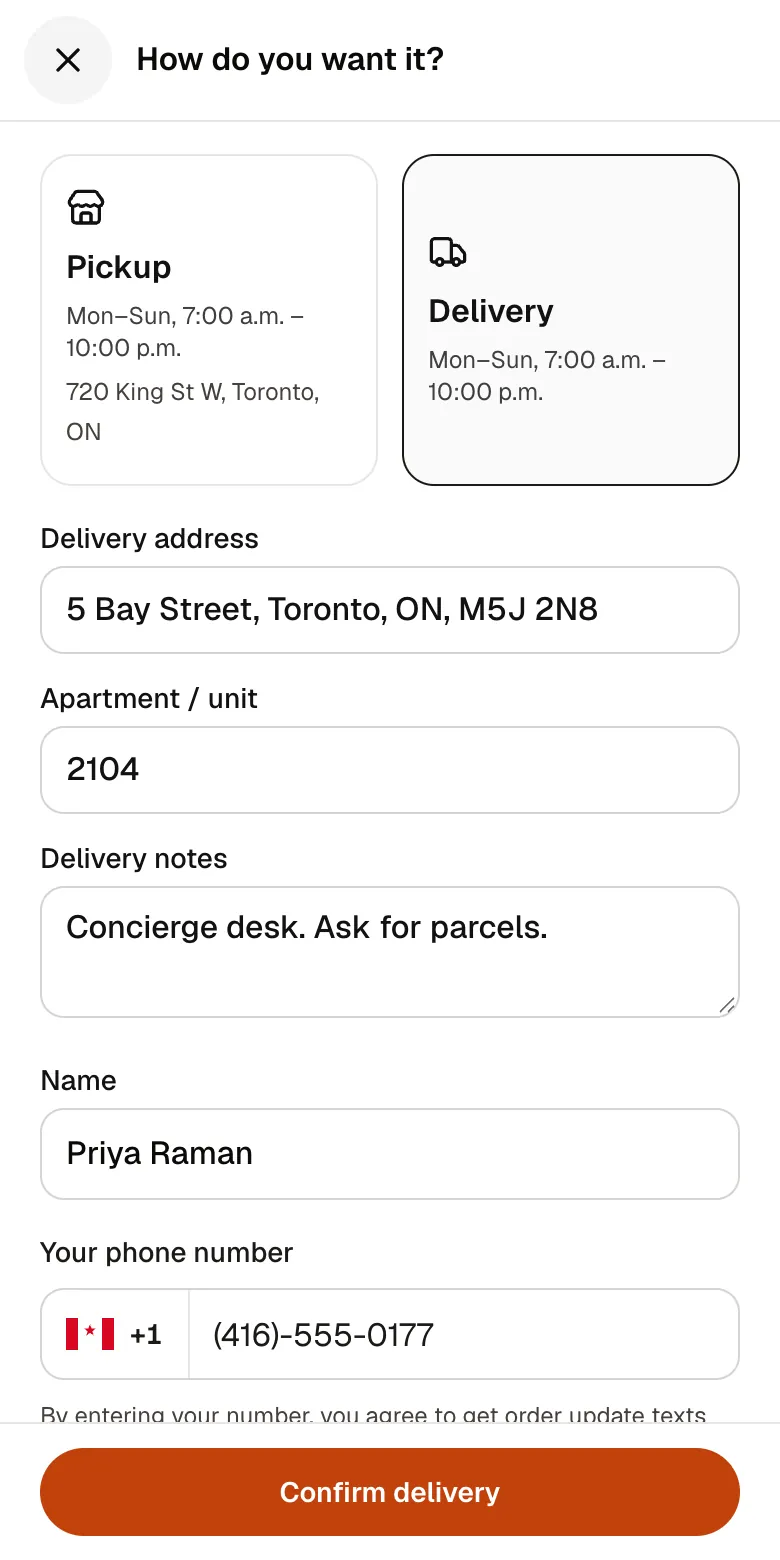
2Your guests
A checkout that takes seconds
A pickup time or a delivery address, then pay by card. No app to install and no account before paying.
See how it works
FAQ
Questions
Do I need a license to sell baked goods from home in Michigan?
No. Michigan cottage food operations are exempt from the Food Law's licensing and evaluation provisions, and no registration or inspection is required. Registering with the MSU Product Center is optional.
How much can you make selling food from home in Michigan?
The statute sets $50,000 a year, or $75,000 if you sell products priced at $250 or more per unit, effective March 24, 2026. MDARD may adjust the amounts for inflation each October 1 starting in 2026.
Can I sell cottage food online in Michigan?
Yes. Cottage food may be sold by internet or mail order, or delivered through a third-party food delivery platform, if you give the buyer a chance to interact with you first. Buyers must be in Michigan.
Can I sell cottage food to stores or restaurants in Michigan?
No. The statute prohibits sales by consignment or at wholesale, and cottage food must be sold directly from you to the consumer.
What does a Michigan cottage food label need to say?
It must say "Made in a home kitchen that has not been inspected by the Michigan department of agriculture and rural development," plus your name and address or MSU registration number, the product name, ingredients, net quantity and allergens.
Keep reading
- GuideCottage food laws by state: caps, permits, online salesCottage food laws explained: what they are, the rules most states share, how to start selling from home, and a 15-state table of caps and permits.
- By businessSell food from home: your own ordering pageSell food from home with a weekly menu, an order cutoff and pickup windows on your own link. Cottage food rules explained. Free onboarding, 10% per order.
- GuideHow to start a bakery business from homeHow to start a bakery business from home: check your cottage food rules, pick bakes that qualify, label and price them, take pre-orders. Steps and sources.
- ProductOnline ordering system for restaurantsAn online ordering system for restaurants: your own site at yourname.pickup.kitchen, time slots that close when full, and a kitchen screen. 10% per order.
- By businessBakery POS with online pre-ordersBakery POS that takes counter sales and online pre-orders on one menu, with pickup windows, an order cutoff and a stock count for each item. 10% per order.
Free onboarding. Pay as you use.
Take orders from your home kitchen
Set pickup windows and delivery, publish your label details, and take your first orders on your own site.